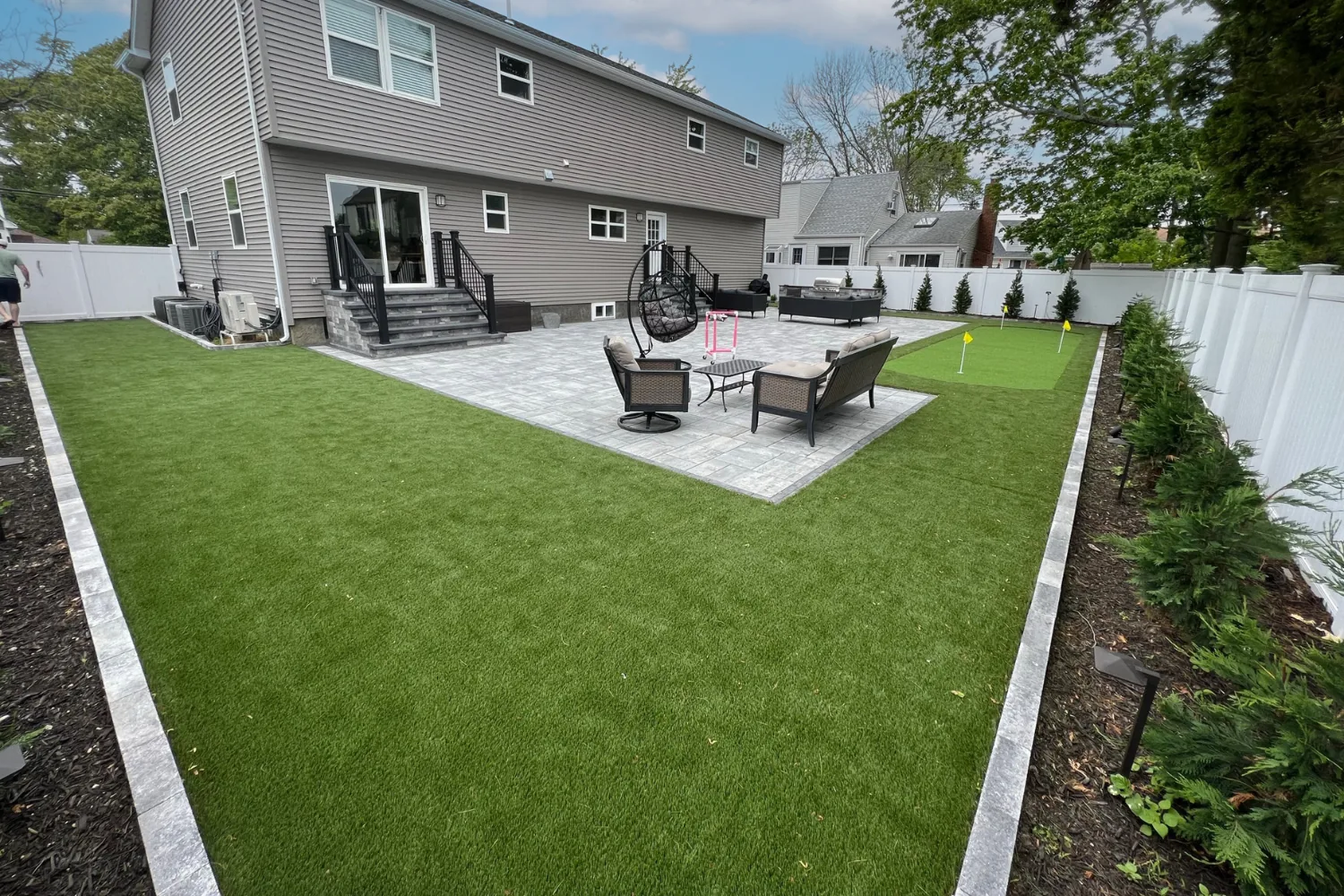
Artificial turf is sold as a fix-it-and-forget-it lawn, and for the most part that promise holds. But turf is still a physical surface living outdoors in West Texas, and things happen: a seam lifts at the edge of a patio, a barbecue ember melts a quarter-sized hole, a puppy tunnels under a border, or a low spot develops after a wet Concho Valley spring. The question San Angelo homeowners ask us most is whether these problems mean tearing out the whole yard. Almost never. Most turf damage is a localized repair, and knowing what is fixable saves you from an unnecessary full replacement.
Here is a practical look at the repairs we handle most around Tom Green County, what causes them in our climate, and when a patch is genuinely the wrong answer.
The most common repair call we get in San Angelo is a seam that has started to lift, usually along a walkway edge or where two rolls meet in the middle of a lawn. Seams fail for a few local reasons. Our caliche and clay soils expand and contract with moisture, which can nudge a base out of level over a season or two. Extreme surface heat softens seam adhesive that was applied on a cool day or applied too thin. And foot traffic concentrated on one path, like the route from a back door to a pool, works a marginal seam loose over time.
A proper seam repair means folding the turf back, cleaning out old adhesive and debris, re-leveling and re-compacting the base underneath, then rejoining with seam tape and a fresh bead of outdoor turf adhesive rated for high heat. Done right, the repaired seam disappears and is stronger than the original. Done with a squeeze of hardware-store glue on a 100-degree afternoon, it lifts again by August.
Synthetic blades are plastic, so direct high heat will melt them. In San Angelo we see two culprits. The obvious one is a grill, fire pit, or dropped cigarette. The sneaky one is reflected sunlight: energy-efficient windows with low-E coatings can bounce a concentrated beam onto a lawn hot enough to warp blades in a single afternoon, and we see this on newer homes across College Hills and the newer subdivisions on the south side. A melted patch cannot be un-melted, but it can be cut out and replaced with a matching plug from leftover material or a discreet donor area, blended so it is hard to spot.
Have a damaged spot you are staring at right now? Text us a photo and we will tell you whether it is a simple plug repair or something bigger. Call or text (615) 241-0232.
Dogs love turf, and most of the time turf loves them back. But a determined digger can pull up an edge or a border that was not anchored well, and heavy urine spots on a poorly draining lawn can leave matted patches. The repair depends on the cause. A pulled edge gets re-secured with landscape spikes or a fresh nailer board. A matted or odor-holding zone usually points to an infill or drainage shortfall, so the real fix is refreshing the antimicrobial infill and, in stubborn cases, improving the base drainage rather than just swapping fibers. We cover the odor side in depth in our pet-turf guides, but the structural repair is quick.
If your lawn has developed a dip that puddles after one of our rare downpours, or a ripple that looks like a wave, the turf itself is usually fine, the base moved. This is a West Texas soil story: caliche does not drain uniformly and can slump where it was under-compacted. The repair is to open that section, add and re-compact aggregate to restore the grade, and re-lay the turf. It is more involved than a seam but still a spot repair, not a teardown.
Honesty matters here. If a lawn is more than twelve to fifteen years old, has widespread matting where the blades no longer stand up, and the color has genuinely gone flat across the whole surface, patching individual spots is throwing good money after bad. At that point the fibers themselves have reached the end of their service life and a full replacement gives you a better result for the money. The ASTM International standards that govern synthetic turf durability assume a finite fiber lifespan, and no repair resets that clock. We will tell you plainly which situation you are in.
Small cosmetic fixes, like brushing up a flattened path or topping off infill, are fine for a handy homeowner. Seam work and heat-plug repairs are where people get into trouble, because matching pile direction, height, and color while getting adhesive to cure in San Angelo heat is genuinely tricky. A visible mismatched patch in the middle of a front yard is worse than the original blemish. If the repair is anywhere people will see it, it is worth having someone match it properly the first time.
Whether you are in the heart of San Angelo or out toward Wall, Grape Creek, or Christoval, most turf repairs are a same-visit job once we see the spot. We keep common pile heights and shades on hand for plugs, and we can usually blend a repair so you would never know it happened. The goal is always the least invasive fix that actually lasts through our heat and soil.
Repair pricing depends entirely on the type and size of the problem, but a few ranges help set expectations. A small heat-plug or a single burned spot is typically the least expensive fix, often handled in one short visit. Re-seaming a lifted joint runs higher because it involves base work and curing time, and re-grading a settled low spot costs the most of the common repairs since it means opening the base and re-compacting aggregate. Even so, a spot repair is a fraction of the cost of replacing a full lawn, which is the whole point of catching problems early. We give a firm number on-site once we see the actual damage rather than guessing over the phone, because a photo can hide whether the base moved underneath.
One more San Angelo-specific note: schedule seam and adhesive repairs for a cooler part of the day or a milder stretch of the calendar when you can. Adhesive cures more predictably below the blistering midsummer surface temperatures we hit on dark-colored turf, and a properly cured seam is a permanent seam.
San Angelo Elite Turf repairs seams, plugs, pet damage, and low spots, and will tell you honestly when a repair beats replacement.
Yes. A melted patch cannot be reversed, but it can be cut out and replaced with a matching plug from leftover or donor material and blended so it is difficult to notice.
No. A lifted seam is a localized repair. We fold the turf back, re-level and compact the base, and rejoin with heat-rated seam tape and adhesive, which is usually stronger than the original seam.
Serving San Angelo and the greater Concho Valley with water-free, drought-proof lawns.