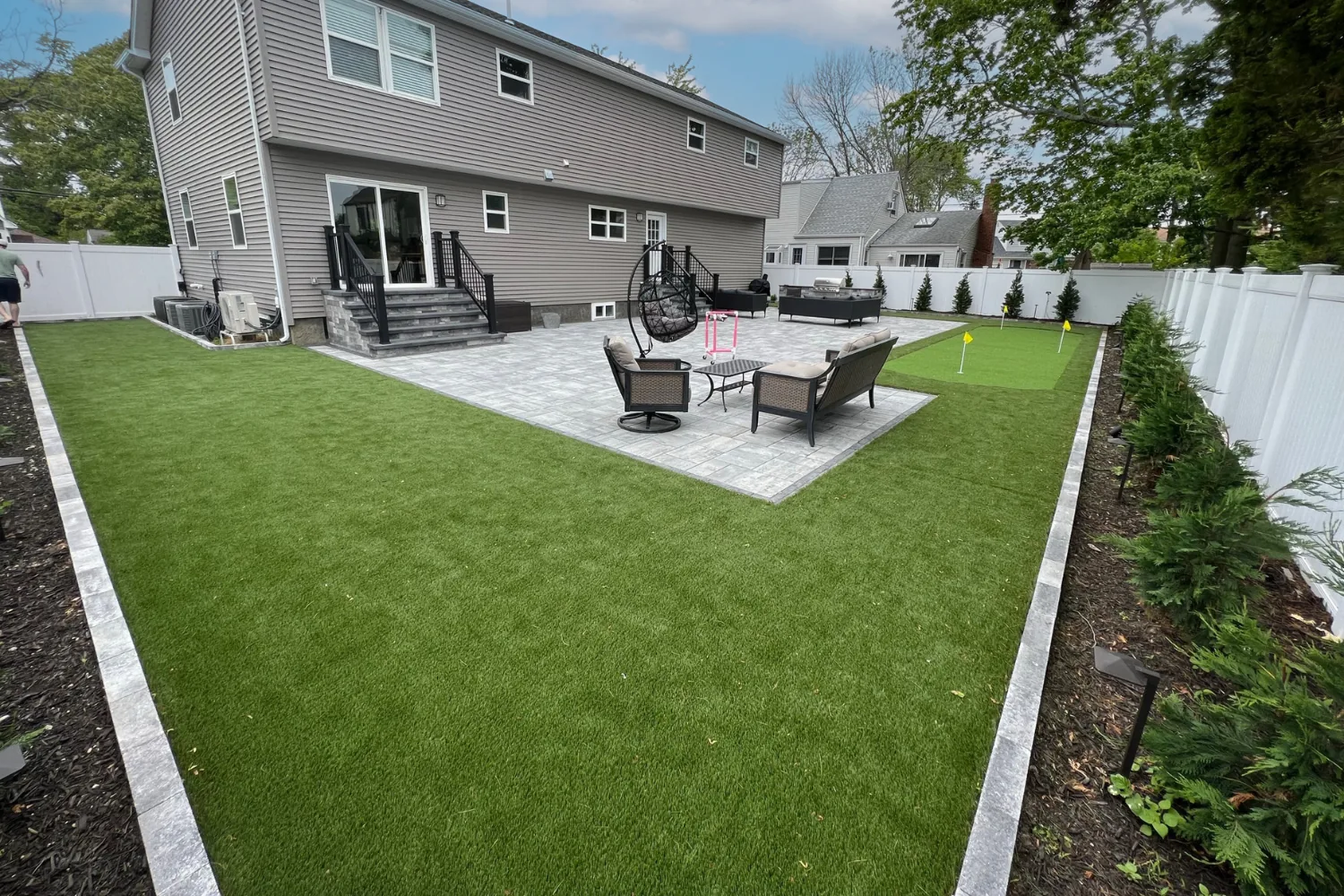
It is one of the first questions we hear from homeowners in San Angelo and out in Wall, Grape Creek, and Christoval: if I put down artificial turf, am I just going to be fighting weeds all over again? It is a fair worry. Anyone who has spent a West Texas summer battling goatheads and careless weed in a caliche yard has earned a little skepticism. The honest answer is that a properly installed turf lawn is one of the most weed-resistant surfaces you can have in the Concho Valley — but only if the base beneath it is built correctly. This guide walks through exactly why weeds struggle to grow through turf, where the rare ones actually come from, and how to keep your lawn clean through our dusty, windy seasons.
A weed needs three things to survive: a seed, soil to root in, and water. A correctly built artificial turf system removes two of the three. When we install in San Angelo, we excavate three to four inches of native soil, then compact a base of crushed rock and decomposed granite over a woven geotextile weed barrier. That fabric is the key. It lets water drain straight through into our caliche subsoil but blocks any seed sitting in that ground from reaching daylight. On top of the base sits the turf backing itself, which is a solid, perforated sheet. There is simply no exposed dirt for a seed to sink roots into. Compare that to a mulch bed or a thin decorative-rock border, where seeds land directly on loose organic material and thrive within days of a rain.
When a San Angelo homeowner does spot a weed on an established turf lawn, it is almost always growing on top of the turf, not up through it. Here is how that happens. Our spring winds off the Edwards Plateau carry a remarkable amount of fine dust and seed. Over a season or two, that organic material settles into the turf fibers and infill, especially in low-traffic corners and along fences. Give it a few good monsoon-season rains and a stray seed can germinate in that thin layer of trapped dust. Its roots never reach the base — they are clinging to surface debris — so it pulls out with almost no effort. This is cosmetic, not structural, and it is a world away from digging Bermuda runners out of a real lawn.
West Texas has a few weeds that earn their bad reputation, and homeowners want to know how turf handles them specifically. Goathead (puncturevine) spreads by seed, so the barrier-and-base system stops it cold underneath — your only job is keeping the surface clean so wind-dropped seed has nowhere to sprout. Bermuda grass and nutsedge are the aggressive spreaders that ruin cheap installs, because both send out runners and rhizomes that will exploit any seam, gap, or thin base to push upward. This is precisely why we kill and remove existing Bermuda before installing, not just cover it, and why a full-depth compacted base matters so much in the Concho Valley. Cover living Bermuda with turf and no barrier, and it will find the drain holes by the next summer.
If weeds are going to be a nuisance, it will be where your turf meets something else: a flower bed, a tree ring, a driveway crack, or the gap under a fence. These transition zones collect wind-blown seed and often sit next to loose soil or mulch that is easy to root in. In neighborhoods around Bentwood and the Bluffs we pay special attention to these borders during install, trenching the turf edge and anchoring it so there is no lifted lip for seeds and soil to slip under. A clean, tight perimeter is the difference between a lawn that stays pristine and one that grows a fuzzy green fringe every April.
The maintenance is genuinely light, but a little rhythm helps. In late winter, before our March green-up, a preventive spray of a standard pre-emergent or a household vinegar solution along bed edges stops most seeds before they sprout. Through spring and after monsoon rains, a quick walk of the perimeter to pull the odd surface weed keeps things tidy. A periodic rinse or leaf-blow removes the dust and organic matter that weeds need to germinate in the first place — the cleaner your fibers, the less anything can take hold. Homeowners who keep infill topped up and give the lawn an occasional cross-brooming rarely see a weed at all. None of this involves a mower, a string trimmer, or a Saturday lost to yard work.
Not all turf is created equal, and weed problems almost always trace back to shortcuts. The most common one we are called to fix in the Concho Valley is turf laid directly over old grass or bare caliche with no weed barrier and little or no compacted base. In that situation you are essentially carpeting a living lawn, and Bermuda and nutsedge will happily push up through the seams and drain holes within a season. Thin base also means poor drainage, and standing water plus trapped seed is a recipe for growth. If you are comparing installers, ask specifically about the geotextile barrier, the base depth, and how they finish the edges. The U.S. EPA's WaterSense landscaping guidance is a useful reminder that a well-built, low-water surface should reduce yard work, not create a new chore.
Weeds growing up through artificial turf is, for practical purposes, a solved problem when the system is installed right. The barrier and base leave no soil for roots, and the handful of surface weeds you might see in a dusty West Texas year pull out in seconds. The people who struggle are the ones who bought the cheapest install and skipped the base. Build it properly for San Angelo's caliche, wind, and heat, and you get exactly what you wanted when you replaced your grass: a green lawn you look at, not one you fight. If you would like your yard assessed for drainage, edging, and the right base depth before install, we are glad to walk it with you.
Almost never through the turf itself. On a correctly built system the weed barrier and compacted crushed-stone base leave no soil for seeds to root in. The stray weeds people notice sprout in windblown dust that collects on top of the turf or in the seams along a flower bed — not from the caliche underneath. A quick pull or a light vinegar spray handles those.
Edges are the one weak point in the Concho Valley because our dry, gusty spring winds drop seeds right into the border. We bend the turf into a trenched, secured perimeter and many San Angelo homeowners add a thin steel or poly edge against planting beds. Keeping mulch a couple inches below the turf line and spot-treating in March and September keeps the border clean year-round.
Serving San Angelo and the greater Concho Valley with water-free, drought-proof lawns.