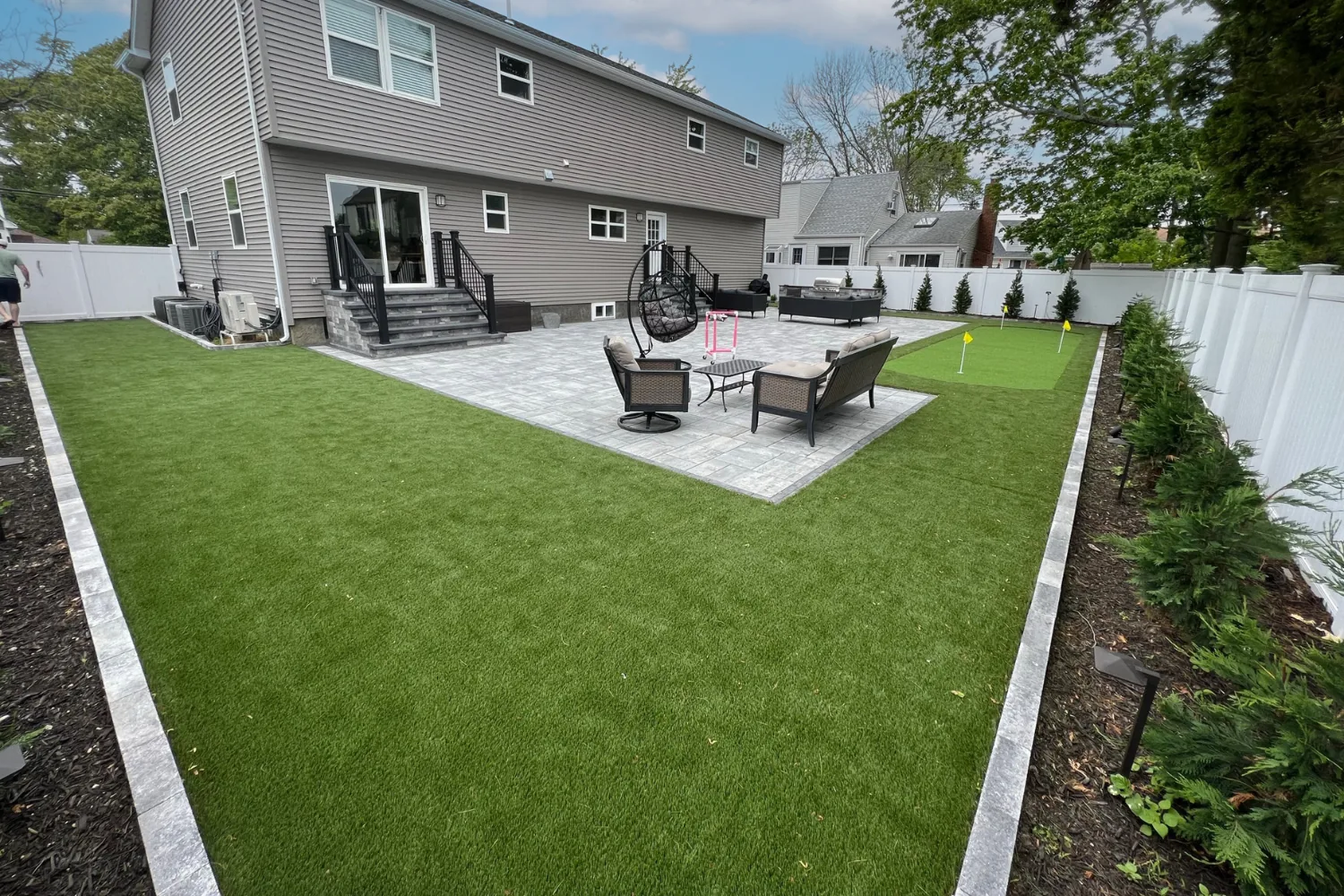
It is the number one question we get from homeowners across San Angelo and the wider Concho Valley: on a July afternoon when the thermometer is pushing 104 and the caliche is baking, does an artificial lawn turn into a griddle? The honest answer is that synthetic turf does heat up in direct West Texas sun, more than natural grass and less than bare concrete, but how hot it gets and whether that actually matters for your family comes down to product choice, infill, and how the yard is laid out. Here is the real picture, with no sales spin.
Natural grass stays close to the surrounding air temperature because living blades release moisture and cool themselves through transpiration. Synthetic blades cannot do that, so they absorb solar radiation and hold it. On a typical San Angelo summer day in the high 90s to low 100s, an unshaded turf surface can read 40 to 60 degrees hotter than the air. That means a lawn can measure 140 degrees or more at the peak of the afternoon, roughly in the same range as an asphalt driveway and cooler than a bare concrete patio, which often runs hotter still.
The key word is peak. That reading happens for a few hours around solar noon on the darkest, densest products in full sun with no breeze. By early evening, when most Concho Valley families are actually outside grilling or letting the dog out, the surface has already shed most of that heat. Turf does not store warmth the way a slab of concrete does overnight, so it cools quickly the moment it falls into shade. Come back out at 8 p.m. after a scorching day and the lawn feels close to comfortable again.
San Angelo sits under some of the highest UV exposure in Texas. We get long, cloudless stretches from June through September, low humidity that lets the sun hit hard, and reflective caliche and rock that bounce extra radiation back up at the lawn. A turf product that stays reasonable in Dallas or Houston, where afternoon clouds and humidity cut the load, can run hotter here. That is exactly why we do not install a one-size-fits-all roll. What performs in Water Valley or Mertzon out in the open country is specified differently than a shaded courtyard lawn near downtown. Our summers also bring the occasional 110-degree spike, and a lawn engineered only for average days will disappoint on the extremes.
Most people assume the blade color drives temperature, and it helps, but the infill underneath does more of the work. Standard black crumb rubber is the worst offender in our climate because it soaks up and re-radiates heat like a parking lot. We steer San Angelo homeowners toward lighter mineral infills and specialized cooling infills that reflect more sunlight and hold a little moisture. Options such as coated sand, zeolite, and modern cool-blend infills can knock the surface temperature down by 10 to 20 degrees compared with black rubber, and zeolite has the added benefit of controlling pet odor in the heat.
Blade design matters too. Lighter tan thatch layers, a slightly lower pile height in full-sun zones, and a shorter, denser weave all shave a few degrees and help the lawn recover faster when clouds finally roll through. During your estimate we match the specific product to the specific exposure, rather than selling the same roll to every yard in Tom Green County.
A spray from the garden hose drops the surface temperature dramatically for a couple of hours through evaporative cooling. It is not a permanent fix, but for a pool party in Christoval or a backyard cookout, five minutes with the hose makes the lawn comfortable underfoot right when you need it. Many homeowners set a hose timer or a single pop-up mister on a smart plug to pre-cool the play zone before the kids come home. Because turf needs no mowing, watering, or fertilizer, that occasional rinse is the only summer maintenance the lawn ever asks of you.
The best heat strategy costs nothing extra: put the turf where the sun is not brutal all day. During our on-site visit we map how shade moves across your lot, because a yard in Grape Creek with a mature pecan tree behaves completely differently than a wide-open new build in Miles. We position pet runs, play areas, and the spots where you sit on the east or north side when we can, and we talk through pergolas, shade sails, and awnings that pay for themselves in comfort. Trees that shade the lawn in the afternoon can keep the surface within a few degrees of air temperature, essentially erasing the heat question entirely.
This is what really counts. Use the seven-second rule the same way you would on a sidewalk: press the back of your hand to the surface, and if you cannot hold it there comfortably, it is too hot for bare paws or feet right then. In practice, that window is the middle of the afternoon in full sun, the same time you would not send a dog padding across a hot driveway anyway. Choose a cooler infill, add shade or a quick rinse, and steer summer play toward morning and evening, and a turf lawn stays usable all season. For a deeper look at how hard surfaces trap heat in the built environment, the EPA heat island resources explain the same physics that governs a synthetic lawn.
Yes, artificial turf gets warm in our sun, but too hot to use is a solvable problem, not a dealbreaker. With the right cooling infill, a layout that respects the afternoon sun, and simple habits like a quick hose-down, homeowners from Eola to Carlsbad enjoy a green, water-free lawn every month of the year without dreading July. The difference between a lawn you love and one that bakes is almost always in the details of the install, which is exactly what we get right on every project. If you want a straight answer for your specific yard, we are glad to come measure the sun and show you the options in person.
On the hottest Concho Valley days, an unshaded turf surface can climb well past the air temperature, often into the 140 to 160 degree range on dark, dense products in direct sun. A quick rinse from the hose, a lighter cool-blend infill, and afternoon shade all pull that number down fast, and the surface cools within minutes once the sun drops behind the house.
Use the same seven-second palm test you would use on a sidewalk. If bare pavement is too hot to hold your hand on, turf in full sun will be too. We spec cooler infills and place play and pet zones on the east or north side of the yard wherever the layout allows, so the grass is comfortable during the parts of the day families in Wall, Grape Creek, and Christoval actually use it.
Serving San Angelo and the greater Concho Valley with water-free, drought-proof lawns.