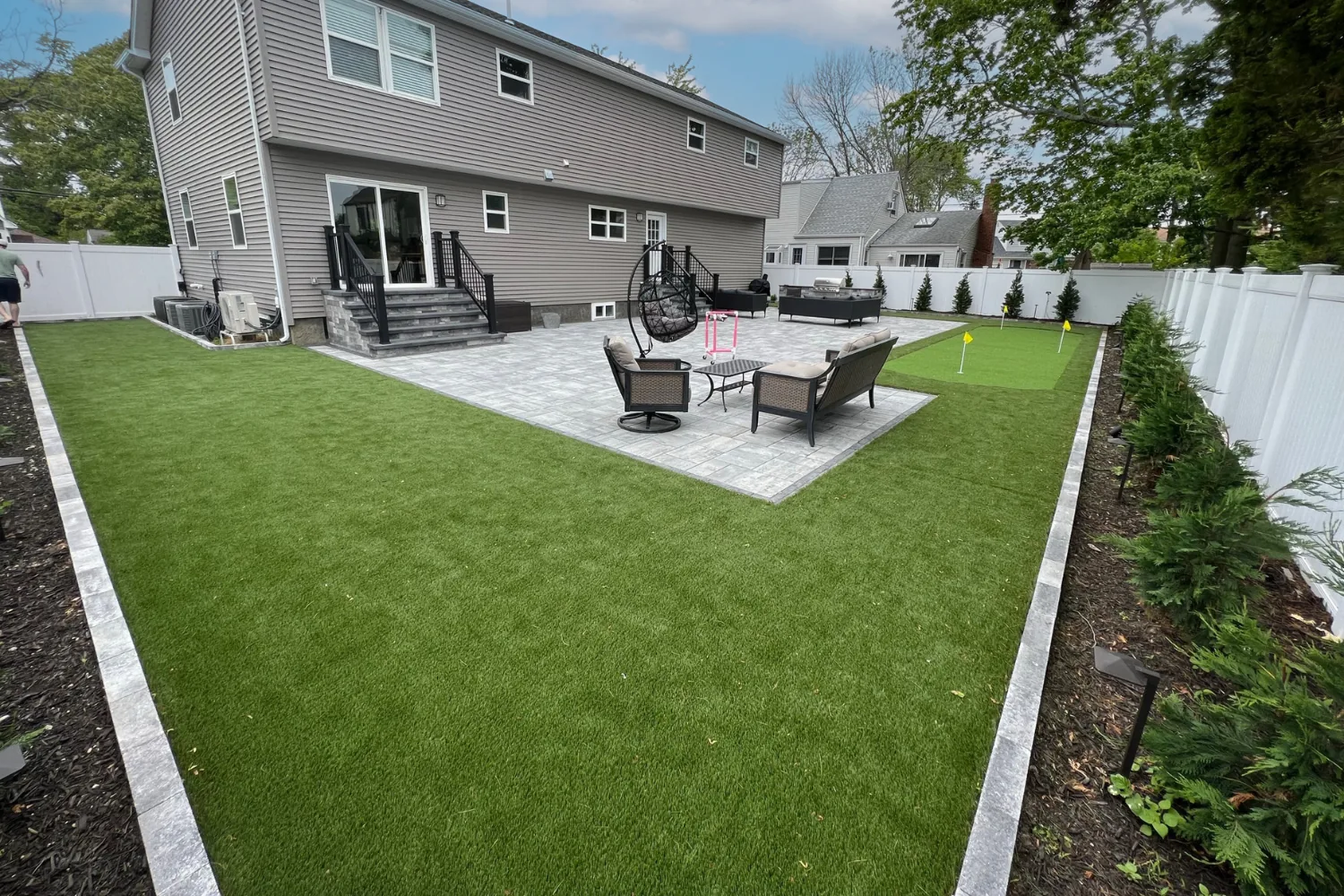
If you have watched your July water bill climb while your St. Augustine still went crispy along the fence line, you have probably asked the honest question: is artificial turf actually worth it here in San Angelo? It is a fair thing to weigh. Turf is a real upfront investment, and the Concho Valley is a punishing place to test any outdoor product, between the West Texas UV, the caliche and clay under most yards, and drought stages that dictate when you are even allowed to run a sprinkler. This guide walks through the real pros, the honest cons, and how to run the break-even number for your own property in Tom Green County.
A quality turf install is not just a roll of green plastic. The money goes into demolition of the existing lawn, hauling out caliche and dead sod, a compacted base of decomposed granite or crushed rock that will not heave in our expansive clay, a weed barrier, the turf itself, infill, and the labor to seam, stretch, and nail it so it lays flat through 105-degree August afternoons. In San Angelo the base work matters more than almost anywhere, because poorly compacted ground over caliche will telegraph every low spot within a year. When people ask if turf is worth it, they are usually comparing the sticker price to a bag of grass seed, which is the wrong comparison. The right comparison is the total ten to fifteen year cost of keeping real grass alive out here versus a surface that needs none of it.
The single biggest driver is water. San Angelo pulls its municipal supply from surface reservoirs like O.C. Fisher and Twin Buttes plus the Hickory aquifer, and in a dry year those levels drop fast, which is exactly why the city enforces tiered drought stages with assigned watering days. A natural lawn in the Concho Valley can drink 30,000 to 50,000 gallons across a single hot season just to stay green, and even then it browns during a Stage 2 or Stage 3 restriction. Turf removes that line item entirely. The second driver is time and equipment: no mowing in 100-degree heat, no reseeding bare patches every fall, no fertilizer, no aerating the caliche, and no gas or repairs on a mower. The third is consistency. Homeowners in Wall, Grape Creek, and Christoval who host in the backyard want a surface that looks the same for a graduation party in May and a Thanksgiving gathering in November, and turf delivers that regardless of the reservoir levels.
Turf is not free of tradeoffs, and a good installer will tell you so. The upfront cost is the obvious one, and it is not small. Dark infill and blades can get hot in direct West Texas sun, which is why blade color, infill choice, and a quick rinse on the hottest days matter for barefoot comfort. If you have large trees, you trade mowing for occasional blowing of leaves and seed pods off the surface. And turf is a long-term commitment: once the base is in, changing your mind means demolition again. None of these are dealbreakers for most San Angelo yards, but they are real, and pretending otherwise does you no favors.
The math is simpler than most people expect. Add up what you currently spend each year keeping real grass alive: your summer water overage, fertilizer and weed control, mower fuel and maintenance, and any pro mowing or reseeding. For a lot of Concho Valley homeowners that number lands somewhere between 700 and 1,400 dollars a year once you count everything honestly. Divide your turf install estimate by that annual savings and you get your rough payback period in years. Because a good install is built to last well over a decade in our climate, most yards cross into pure savings territory well before the turf wears out. If you want a hard set of local price ranges to plug into that formula, our San Angelo turf cost breakdown lays out the numbers by yard size. You can also see how our water utility structures its restrictions in our guide to San Angelo watering rules.
Turf tends to pay off fastest for homeowners with a full-sun front or back yard that is expensive to keep green, for families with dogs who have already given up on a muddy or patchy lawn, for busy households that do not want to spend summer weekends on yard work, and for anyone renting out a property who wants a low-maintenance, always-presentable exterior. It is a weaker fit for a heavily shaded lot that already stays green with little water, for someone planning to sell within a year who will not capture the savings, or for a buyer chasing the lowest possible upfront price above all else. For a deeper look at longevity before you commit, our post on how long turf lasts in the West Texas sun is worth reading.
A common worry in the Concho Valley is whether turf can survive the same sun that fades patio furniture and cracks bare caliche by August. Quality turf is built for exactly this. The blades are made with UV-stabilized polyethylene and polypropylene that resist fading through years of direct exposure, and the backing is designed to drain hard monsoon downpours straight through rather than pooling. Where cheap big-box rolls go brittle and shiny after a couple of Texas summers, a professionally specified turf keeps its color and spring. The base is what carries it through our freeze-thaw swings and the occasional gully-washer: a properly compacted, well-draining sub-base over the clay keeps the surface flat and prevents the rippling you see on rushed installs. For San Angelo homeowners in Grape Creek, Wall, and out toward Mertzon, that engineered base is the difference between a lawn that still looks sharp in year twelve and one that needs redoing in year three. When you weigh whether turf is worth it, factor in that a real install is designed to outlast several cycles of reseeding a natural lawn, which is a big part of why the long-run math tips in its favor.
The only way to know if turf is worth it for your specific property is a real measurement and a look at your soil, slope, and drainage. Two yards the same size in San Angelo can price out differently depending on how much caliche has to come out and how the water sheds during a monsoon downpour. A reputable local installer will give you a written estimate, explain the base build, and put the warranty in plain language. For broader context on outdoor water use in Texas, the Texas Water Development Board publishes conservation data at twdb.texas.gov. When you are ready, we are happy to give you a straight answer for your yard.
It depends on what you currently spend keeping real grass alive, but many Concho Valley homeowners save 700 to 1,400 dollars a year on water, fertilizer, and mowing. Divide your install cost by that number and most San Angelo yards reach their break-even point well before a quality turf system wears out.
Yes. Because turf needs no irrigation to stay green, it is completely unaffected when the city moves into Stage 2 or Stage 3 watering days. Your yard looks the same in a dry August as it does in spring, while natural lawns brown out under the restrictions.
Serving San Angelo and the greater Concho Valley with water-free, drought-proof lawns.