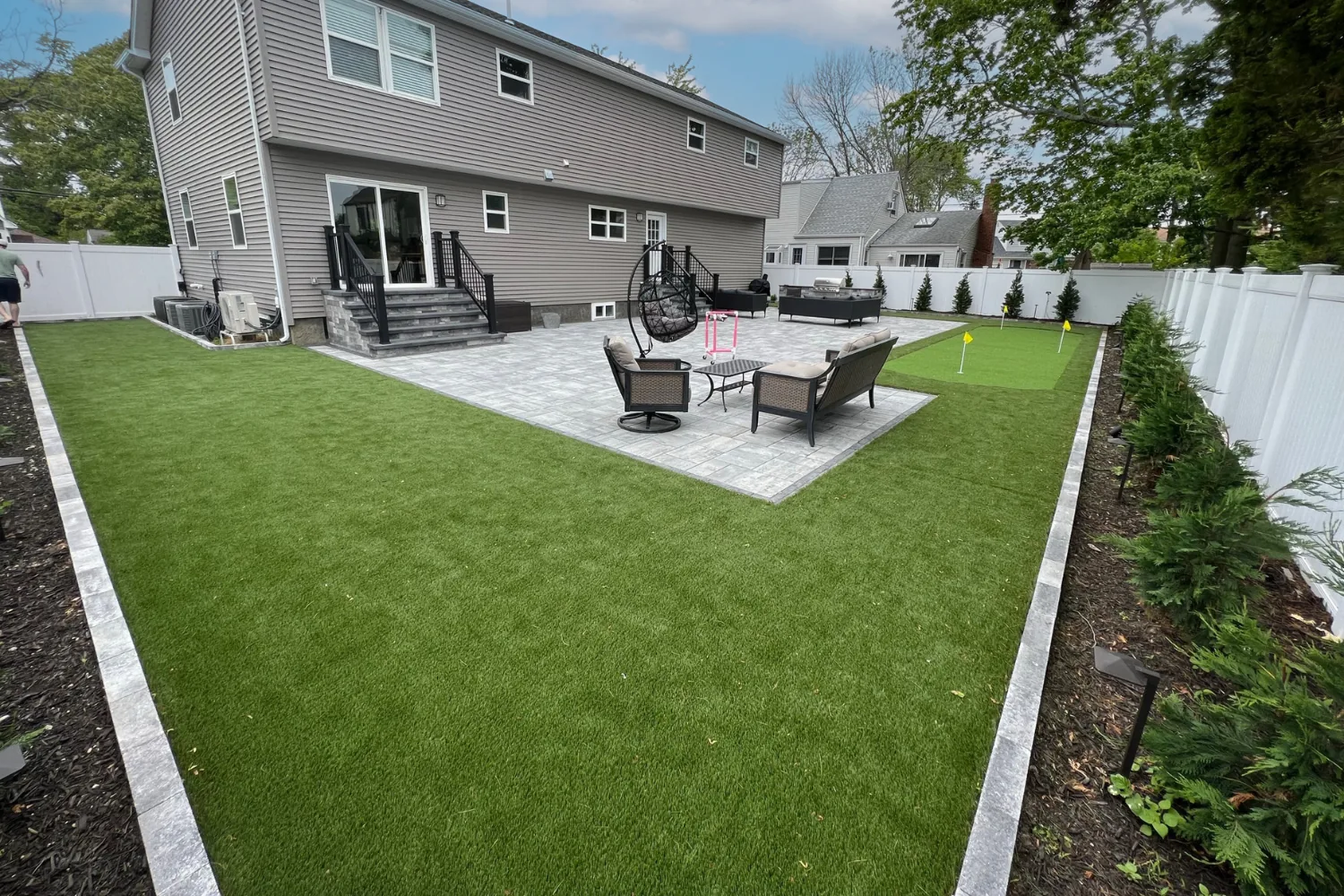
Before you tear out a thirsty lawn in San Angelo, it is smart to know the rules of the road. The good news for Tom Green County homeowners is that artificial turf is treated favorably here because of our long-running drought and watering restrictions. But rules still vary depending on whether your home sits in an older established neighborhood near downtown or in one of the newer subdivisions out toward the southwest side with a homeowners association. This guide walks through permits, HOA covenants, and the practical steps to switch to turf without a surprise letter in your mailbox.
For a standard residential lawn replacement, the City of San Angelo does not typically require a building permit to install artificial turf at ground level in your own yard. Turf laid over a prepared base is considered landscaping, not a structure. Permits generally come into play only when a project involves something beyond the grass itself, such as grading that changes drainage onto a neighbor, a retaining wall on a sloped lot, or commercial frontage work. Because codes get updated, we always recommend a quick call to the city development services office before a large or unusual project, and we are glad to point you to the right department.
San Angelo has lived under some form of drought-stage watering restrictions for years, drawing from a limited supply across O.C. Fisher, Twin Buttes, and Lake Nasworthy. Those restrictions limit how many days a week you can run a sprinkler, and in deeper drought stages they tighten further. Artificial turf uses zero irrigation, which means it sidesteps the restrictions entirely and stays green through every drought stage. Many Concho Valley homeowners switch specifically so they never have to track which watering day they are assigned again. The city's conservation program publishes current stages and rules, and you can confirm your status on the City of San Angelo water utilities page.
If your home is in a managed community, the HOA covenants, not the city, are usually the deciding factor on appearance. Most newer San Angelo associations now permit artificial turf precisely because natural lawns look terrible under watering limits, but some still have language about ground cover, setbacks, or front-yard aesthetics written before turf became common. A handful require that turf meet a minimum quality standard so it does not look like the thin plastic carpet of decades past. A few older covenants were written assuming grass and simply never updated. The practical move is to request your covenant documents and read the landscaping section before you sign a contract.
When an association requires approval, the process is rarely difficult if you come prepared. Submit a short architectural request that includes the turf product specification sheet, the pile height and color, a photo or sample, and the area you plan to convert. Boards respond well to premium, natural-looking turf with a realistic green-brown thatch layer, and they respond poorly to vague requests. Emphasize that the installation eliminates irrigation during drought stages, which is something most boards in the Concho Valley actively want to see. We can provide the product documentation and a simple site drawing to attach to your request, which speeds most approvals along.
Backyards almost never raise an eyebrow, from the city or an HOA, because they are private. Front yards are where appearance rules apply. If your subdivision has front-yard landscaping standards, plan for turf that blends with neighboring lawns, keep clean borders against beds and walkways, and consider a mixed design with turf, decorative rock, and native plantings that reads as intentional landscaping rather than a green rectangle. This also tends to look better and adds curb appeal, which matters for resale in neighborhoods like Bentwood and the Bluffs.
San Angelo landlords and short-term rental owners near Goodfellow Air Force Base and the river have been converting to turf to kill maintenance costs and tenant watering disputes. If you rent out a property, check your lease language and, for a condo or townhome, the master association rules, since exterior changes on attached units often need board sign-off even when a detached home would not. For true short-term rentals, turf is a strong move because it looks perfect in listing photos year-round without a landscaper on payroll.
Installing turf without checking covenants is a gamble that occasionally backfires. In a managed San Angelo community, an association can send a violation notice, levy fines, and in rare cases demand removal of non-compliant landscaping, which would mean pulling up an expensive install. We have never seen the city force removal of a quality residential turf lawn, but HOA disputes are a different animal and depend entirely on the covenant you agreed to at closing. The cost and stress of a fight are easily avoided by spending ten minutes reading your documents and, if needed, submitting a simple request first. It is cheaper to ask than to redo.
Separate from permits, San Angelo like most cities enforces basic property-maintenance and nuisance standards that apply to any yard. In practice, turf makes compliance easier, not harder, because it never grows tall enough to trigger a weeds-and-grass notice, never goes to seed, and never turns into the dead brown lot that draws complaints during deep drought. A well-kept turf lawn with clean edges reads as cared-for year-round, which is the opposite of the code problems that dying natural grass creates in the Concho Valley heat.
If you do need HOA sign-off, build it into your schedule. Architectural committees in San Angelo subdivisions often meet monthly, so a request submitted right after a meeting might wait a few weeks for the next review. Plan for that gap, get your product documents in early, and you will not lose your preferred install date. Homes with no association can move straight to scheduling. Either way, we will not break ground on an HOA property until your approval is in hand, so you are never caught between a committee and a half-finished yard.
For most San Angelo homeowners, the sequence is short: confirm whether you have an HOA, read the landscaping covenant if you do, submit a one-page approval request with product specs when required, and otherwise proceed, since the city does not require a permit for a standard ground-level lawn conversion. Our crews install across Tom Green County every week and have seen nearly every covenant variation in the area, so if you are unsure where your property stands, a quick phone call usually settles it in a few minutes. Switching to turf is one of the few home upgrades that makes you more compliant with local drought rules, not less.
For a standard ground-level residential lawn conversion, the City of San Angelo does not usually require a building permit, because turf is treated as landscaping rather than a structure. Permits come into play only for things like retaining walls, drainage changes affecting a neighbor, or commercial work. When in doubt, a quick call to city development services confirms it.
Most newer San Angelo associations now allow it, since natural lawns struggle under drought-stage watering limits. The covenant language is what governs, so read the landscaping section and, if approval is required, submit the product spec sheet and pile height with your request. Boards favor premium, natural-looking turf and the fact that it uses no irrigation.
Free on-site estimates and HOA-ready product documentation for homeowners across San Angelo and Tom Green County.