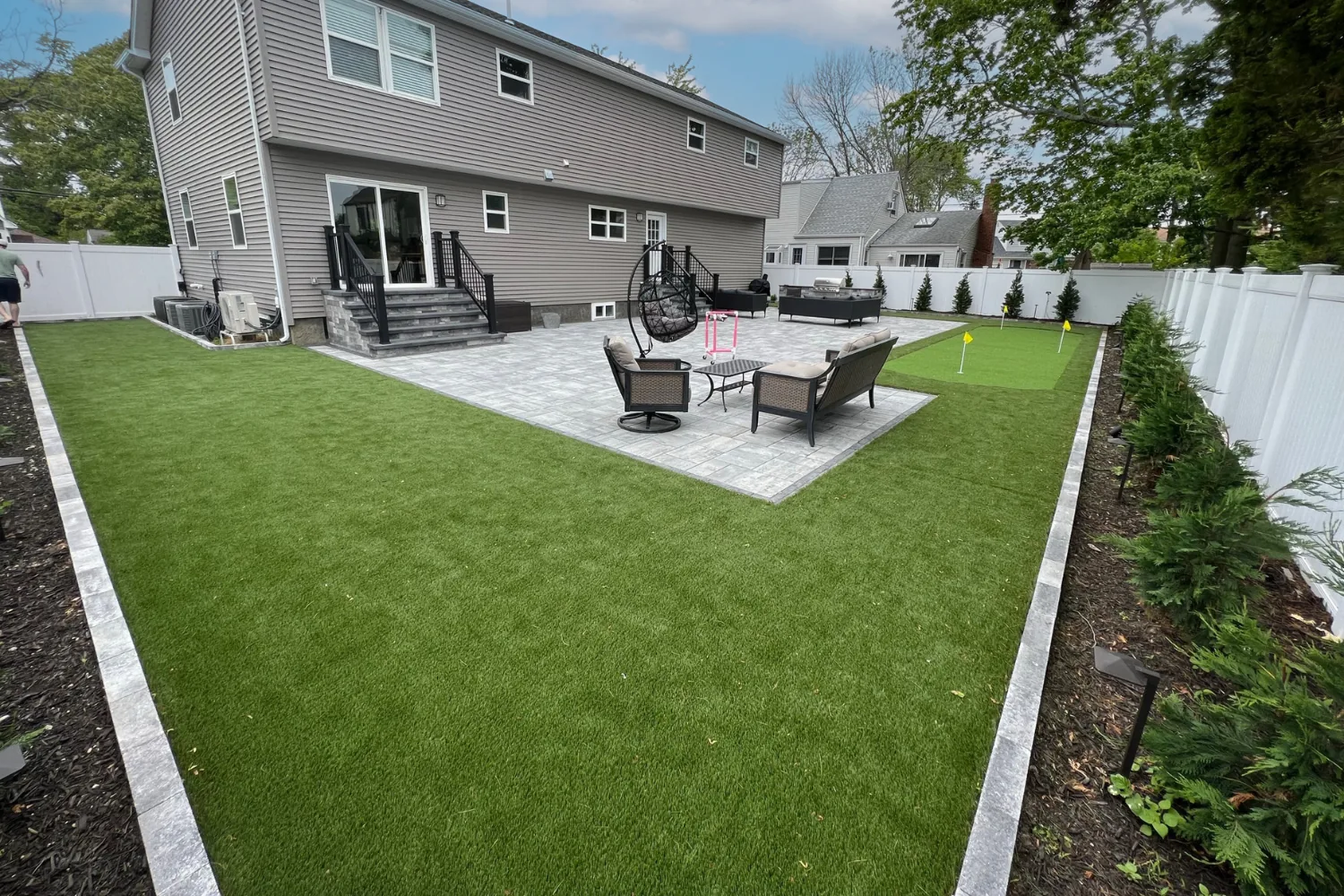
Not all artificial turf is the same, and the specs that matter most, pile height, blade shape, face weight, and color blend, are exactly the ones homeowners never hear about until they are standing in a showroom. Choosing the right combination for San Angelo's climate and your specific use is the difference between a lawn that looks lush for fifteen years and one that mats down, fades, or gets uncomfortably hot by its third West Texas summer. Here is a plain-language breakdown so you can spec your turf like a pro before you ever get a quote.
Pile height is the length of the grass blades, usually measured in inches. For Concho Valley lawns, the sweet spot is between 1.5 and 1.75 inches. That range looks like a healthy, recently mowed Texas lawn, stands up well, and hides infill. Taller piles around 2 inches or more look plush at first but tend to lay over and mat in high-traffic paths, and they trap more heat in our sun. Shorter piles near 1 inch are better reserved for putting greens and pet runs where you want a firm, easy-to-rinse surface. Match the height to the use, not just to what looks tallest in a sample.
The cross-section of each blade controls how the turf stands up and how it handles foot traffic. Cheaper turf uses a flat or oval blade that folds over and looks shiny and fake. Better residential turf uses shapes like a W, S, or diamond profile that have a structural spine, so the blades spring back upright after you walk on them and scatter light instead of glaring. In San Angelo's intense UV, that light-scattering matters, because a blade that reflects less light also reads as more natural and tends to run a touch cooler. We steer local homeowners toward spined blade shapes almost every time.
Face weight is the ounces of yarn per square yard, and it is the closest thing to a quality score. Lightweight turf around 40 ounces feels thin and wears quickly. For a family lawn in Tom Green County, look for a face weight in the 60 to 90 ounce range, which gives you a dense, full surface that resists matting under kids, dogs, and patio furniture. Density, the number of stitches packed in, works alongside face weight. A dense, heavier turf costs more up front but is the single best predictor of how the lawn will look a decade from now under our relentless sun.
Real Texas grass is never a single uniform green. Quality turf mixes two or more green tones with a tan or brown thatch layer woven at the base to mimic the natural dormancy and root zone of living grass. That thatch is what keeps turf from looking like a putt-putt carpet. In San Angelo, where surrounding native landscapes carry a lot of warm, sun-bleached tones, a turf with a realistic olive-and-field-green blend and a brown thatch sits in the landscape far better than a neon monochrome. Always check the color in direct outdoor light, not under showroom fluorescents.
Our climate is harder on turf than almost anywhere, with triple-digit heat and some of the highest UV exposure in Texas. Two specs fight that. First, choose turf with a strong UV-stabilized fiber so the color does not fade or go chalky after a few seasons. Reputable manufacturers back this with warranties, and you can verify fade and wear ratings against standards referenced by the EPA WaterSense landscaping resources and the maker's own documentation. Second, consider a heat-reflective or cool-blade product and the right infill if the area gets barefoot traffic, because blade shape and infill together manage surface temperature far more than pile height alone.
The best turf for you depends on the job. A general family backyard wants a 1.5 to 1.75 inch pile, spined blades, 60-plus ounce face weight, and a realistic multi-tone blend. A dog area wants a shorter, denser pile with antimicrobial backing and flow-through drainage for easy rinsing in our dry heat. A putting green wants a very short, firm, nylon surface. A low-traffic front-yard showpiece can go a touch taller and plusher since nobody is wearing a path across it. Tell us how the space gets used and we will spec accordingly.
Pile height and blade shape do not work alone. Infill, the sand or coated granules brushed down between the blades, is what holds those blades upright, adds ballast against our West Texas wind, and manages heat and drainage. A taller pile needs more infill to stay standing, and a pet area needs a coated antimicrobial infill rather than plain silica sand to control odor in the dry heat. When you evaluate a turf spec, ask what infill pairs with it and at what depth, because the wrong infill can make a great blade mat down or run hot. The blade and the infill are a matched system, not separate choices.
Underneath the blades is the backing, and it matters as much as the surface in the Concho Valley. A quality dual-layer backing with a polyurethane or hot-melt coat locks the stitches in so blades do not shed, and perforated drainage holes let our rare but intense monsoon downpours pass straight through to the compacted base instead of pooling. Pet owners should ask specifically about full-flow or fully permeable backing, which drains urine and rinse water across the entire surface rather than only through scattered holes. You never see the backing once the turf is down, but it decides whether the lawn drains and how long the blades stay anchored.
When two San Angelo turf quotes differ by a thousand dollars, the answer is almost always in these numbers. Ask every installer for the exact product name, pile height, face weight, and warranty in writing. A low bid with unnamed turf is usually a thin, light product that will not survive our summers. When you compare apples to apples on the spec sheet, the value of a quality install becomes obvious, and you avoid the far bigger cost of replacing a failed lawn in five years. Bring us any competing spec sheet and we will tell you honestly how it stacks up for Concho Valley conditions.
Spec matters more than almost any other decision in a turf project. Get the pile height, blade shape, face weight, and color blend right for West Texas, and your lawn will look natural and stay durable long after the novelty wears off.
For a typical Concho Valley family lawn, 1.5 to 1.75 inches is the sweet spot. It looks like a freshly mowed Texas lawn, stands upright, and hides the infill. Go shorter for putting greens and pet runs where you want a firm, rinse-friendly surface, and avoid very tall piles that mat down in traffic and trap more heat in our sun.
Yes. Spined blade shapes like W, S, or diamond profiles spring back upright after traffic and scatter light instead of glaring, so they look more natural and tend to run slightly cooler than cheap flat blades. Combined with the right infill, blade shape manages surface temperature more than pile height does, which matters under San Angelo UV.
Free on-site consultations with real samples so you choose the right pile height, blade, and infill for San Angelo heat.