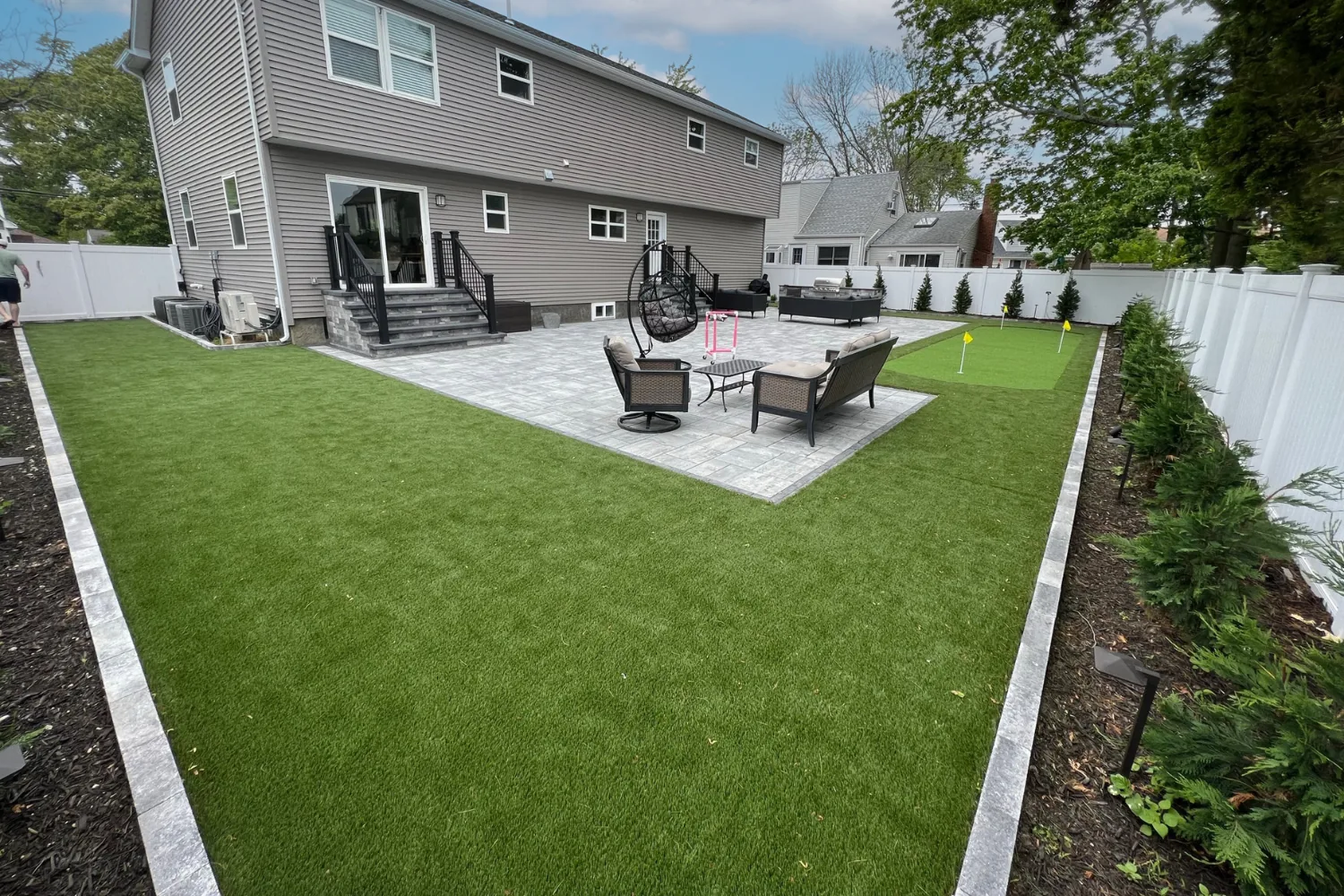
Artificial turf has taken off across San Angelo for good reasons: our watering restrictions, the West Texas heat, and lawns that give up by July. But the boom has also drawn in crews who bought a plate compactor last month and call themselves installers. Since a turf lawn is a fifteen-year investment you literally walk on every day, choosing who builds it matters as much as choosing the product. Here is how to separate a genuine Concho Valley installer from a weekend operation before you sign anything.
The difference almost never shows up in the finished-day photos, because fresh turf looks great no matter who lays it. It shows up eighteen months later in the seams, the drainage, and the edges. A real installer treats the base as the product and the grass as the finish. They can tell you their base depth, their compaction target, and how they slope water away from your foundation. A weekend crew talks only about blade color and price. In San Angelo, where caliche swells and shrinks with every rain, that base knowledge is the whole ballgame.
Bring a short list to every estimate. How many inches of base rock do you install, and what type? What density do you compact to? How do you handle drainage on a lot that slopes toward the house? Do you acclimate the turf in the sun before laying it? What infill do you use, and is there a pet option? Who does the actual work, your employees or day labor? The answers do not need to be technical-sounding; they need to be specific. Confident specifics beat smooth sales talk every time.
Watch for a quote that lists a single lump sum with no base spec, because that is where corners get cut invisibly. Be wary of anyone who wants full payment up front, cannot produce a Texas liability insurance certificate, or pressures you to decide today. A price far below every other bid in town is not a deal; it usually means two inches of base instead of four, no weed barrier, or nails spaced too far apart. You will not see the difference on install day, only after the first wet-dry season pushes a wrinkle up through the lawn.
Turf carries two separate warranties, and homeowners confuse them constantly. The manufacturer warranty covers the grass fibers against UV fade and typically runs eight to fifteen years, which matters under our brutal sun. The workmanship warranty comes from the installer and covers seams, drainage, and settling. A crew that will not put its own labor warranty in writing is telling you something. Confirm the infill type and amount in the contract too, since skimping on infill is a quiet way to lower a bid.
Online reviews help, but weight the ones that name San Angelo, Wall, Grape Creek, or Christoval, because a lawn that has survived a few West Texas summers tells you more than a five-star review from three states away. Ask for two or three references whose yards you can actually see, and if you can, look at an install that is a year or two old rather than brand new. You can also verify a company through the Better Business Bureau and confirm they carry real insurance. A reputable installer hands over references before you even ask.
The best San Angelo turf installer is rarely the flashiest or the cheapest. It is the one who walks your yard, checks the slope and soil, explains the base they will build, and puts every layer in writing. That kind of company is still standing to honor a warranty five years from now. Take your time, ask the base questions, and let the specifics, not the sales pitch, make the decision for you.
Ask for a Texas contractor liability insurance certificate, a physical Tom Green County address, and two or three recent local references you can drive by. Look them up on the Better Business Bureau and read reviews that mention San Angelo, Wall, or Grape Creek by name. A real installer welcomes all of this; a fly-by-night crew gets vague fast.
Rarely. The cheapest bid usually saves money by thinning the base or skipping compaction, and that is exactly what fails in our caliche within a year or two. Compare what each quote includes below the grass, not just the price per square foot, and the lowest number often turns out to be the most expensive lawn.
Serving San Angelo and the greater Concho Valley with water-free, drought-proof lawns.