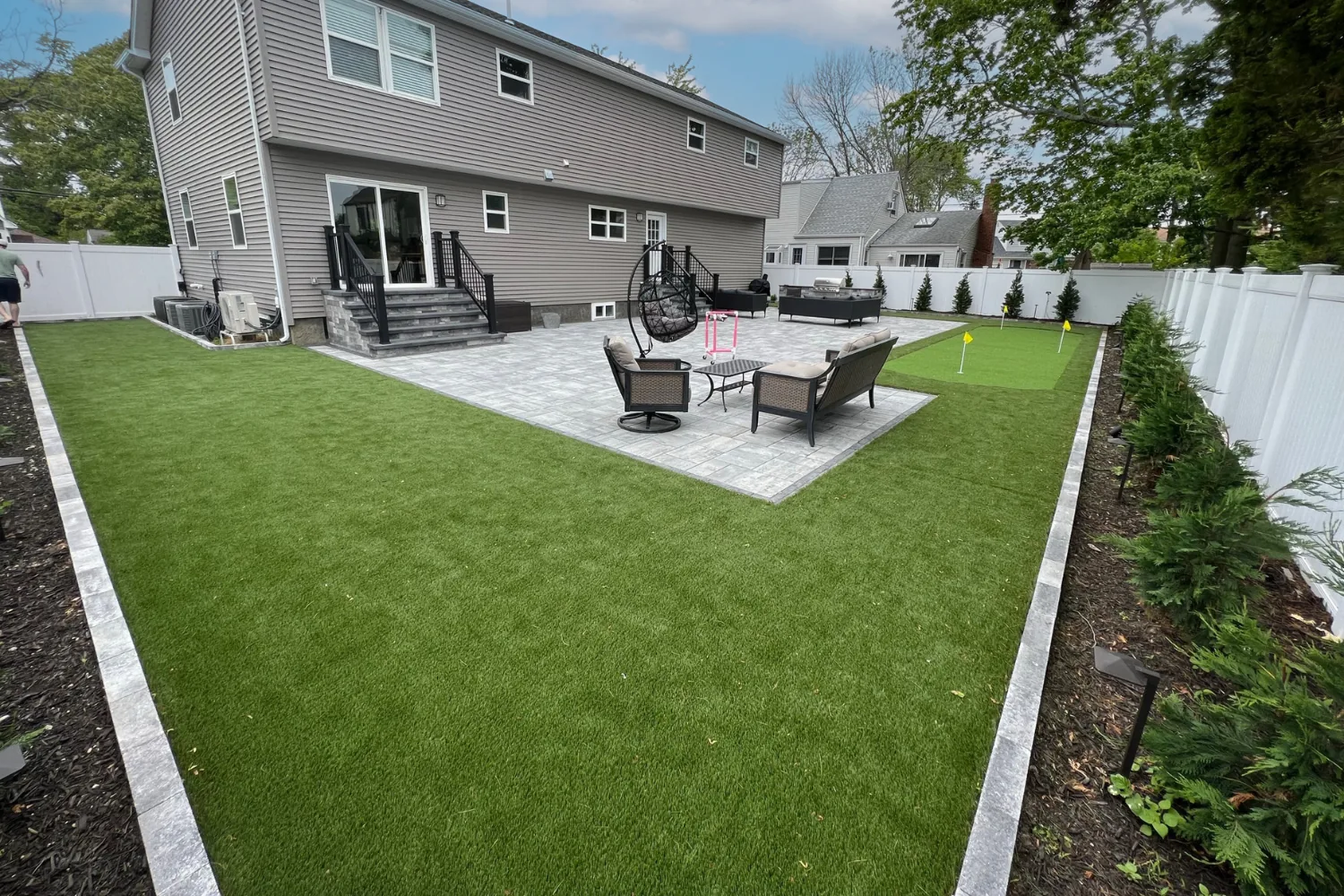
Artificial turf is one of the best things a San Angelo dog owner can do for a muddy, patchy back yard, but there is one worry that comes up every time: will it start to smell? In a wetter climate, rain rinses a pet lawn for you. Here in the Concho Valley, our dry heat and long stretches without rain mean odor control is something you manage on purpose, not something the weather handles. The good news is that a properly built pet turf system stays completely odor-free with a light routine. This guide explains why odor happens, how the right drainage and infill prevent it, and the simple habits that keep a West Texas pet yard smelling clean all summer.
Odor on turf almost never comes from the turf itself. It comes from urine that is allowed to concentrate in the infill and base without ever being flushed through. Solid waste is picked up like normal, so that is rarely the issue. The culprit is liquid, and San Angelo makes it trickier for one reason: heat and evaporation. When temperatures sit above 100 degrees for weeks and no rain falls, urine that would rinse away in a humid climate instead dries and concentrates, and that is what you smell. Understand that and the whole problem becomes manageable, because if liquid keeps moving down and out of the system, there is nothing left to create odor.
The foundation of an odor-free pet yard is built before the turf is ever rolled out. A pet-focused install uses a fully permeable turf backing over a free-draining base of decomposed granite or crushed rock, so liquid passes straight through instead of pooling on top of our clay. Just as important is the infill. Standard sand infill can trap and hold odor, while an antimicrobial or zeolite-based infill actively captures ammonia and releases it when you rinse, dramatically cutting smell between cleanings. Getting these two things right up front is why professionally installed pet turf behaves so differently from a cheap DIY roll laid on bare ground. If you are still choosing a system, our guide to the best turf for dogs in West Texas walks through the specific backing and infill choices that matter here.
The routine is easier than most people expect. Pick up solids daily as you would on grass. Once a week, give the pet zone a thorough rinse with the hose to flush any concentrated urine down through the infill and base; in the hottest, driest weeks you may bump this to twice a week. Every few weeks, follow the rinse with an enzyme-based turf cleaner that breaks down the compounds responsible for odor rather than just masking them. That is the entire program for the vast majority of San Angelo dog owners. Because the base drains fast, the water you use to rinse is gone in minutes, and the yard is ready to use again almost immediately.
It is worth understanding the two products that make the biggest difference. Zeolite is a natural mineral infill with a porous structure that traps ammonia molecules from urine; when you rinse, or when an occasional light application of a neutralizer is used, it releases and resets, ready to capture again. Manufacturers such as ZeoFill publish detail on how this works at zeofill.com. Enzyme cleaners are the second tool: they contain biological agents that digest the organic compounds behind odor instead of covering them with fragrance, which is why they work when air fresheners fail. Used together in a hot, dry climate like ours, they keep a pet yard genuinely fresh rather than just tolerable.
Because evaporation is your enemy here, timing helps. Rinsing in the cooler morning or evening lets water do its job before the sun bakes the surface, and it also keeps infill temperatures comfortable for paws. During a long rain-free stretch, do not wait for a smell to appear; a consistent schedule prevents concentration in the first place, which is far easier than chasing an odor after it sets in. Homeowners in Wall, Grape Creek, and out toward Christoval find that once the weekly rinse becomes a habit, the yard simply never develops that problem. It is the same principle as watering restrictions rewarding consistency, only here the goal is flushing rather than growing.
If a yard does develop persistent odor, it is almost always a sign that liquid is not draining as it should, that the infill was not the right type, or that cleaning simply lapsed during a heat wave. A deep enzyme treatment usually resolves a routine buildup. If it does not, the fix may be a professional deep clean with a power broom and infill top-off, or in rare cases correcting drainage that was never built right. This is one more reason a proper install pays off: a system engineered for pets and our climate almost never reaches that point. For context on the overall investment, our San Angelo turf cost breakdown shows where pet-ready features fit into a quote.
It helps to remember what turf is replacing. A natural back yard with active dogs in San Angelo usually means bare dirt tracks along the fence, mud after every rare rain, dust the rest of the year, and holes that never seem to fill in. Grass simply cannot recover fast enough between the paw traffic and the heat, so owners end up with a patchy surface that tracks into the house. Turf ends all of that: a consistent, cushioned, always-green surface that dogs cannot dig into ruts and that hoses clean in minutes. The odor question is really the last hesitation standing between owners and that outcome, and as this guide shows, it is fully solved with the right build and a light routine. Families out in Miles, Water Valley, and the neighborhoods around Goodfellow report that the yard finally stays usable year-round, that the dogs stay far cleaner, and that the smell they feared never materializes. When you weigh a weekly rinse against constant mud, dust, and reseeding, the trade is an easy one, and it is why pet turf has become one of the most popular reasons homeowners across the Concho Valley call us in the first place.
Every property is a little different, so the smartest first step is a quick walk-through where we look at your drainage, your dogs' favorite spots, and how much sun the yard takes through a Concho Valley afternoon before recommending the exact infill and layout.
The difference between a pet yard that smells and one that stays fresh is decided at installation. Ask any installer specifically about permeable backing, base drainage, and whether they use an antimicrobial or zeolite infill for pet zones. A local company that understands San Angelo heat and evaporation will build for it from the start, and will explain the simple upkeep in plain terms. Done right, turf gives Concho Valley dog owners a clean, mud-free, always-green yard that holds up to the animals and the climate alike.
Not when it is built and maintained for our climate. Odor comes from urine concentrating in the infill during long dry spells, so a permeable backing, a zeolite or antimicrobial infill, and a weekly rinse keep a Concho Valley pet yard completely fresh. In the hottest weeks, rinsing twice a week prevents any buildup.
A zeolite-based or antimicrobial infill is ideal here because it traps the ammonia in urine and releases it when you rinse, which matters in a climate where evaporation would otherwise concentrate odor. Paired with fast-draining base rock, it is the single most important choice for a smell-free pet yard.
Serving San Angelo and the greater Concho Valley with water-free, drought-proof lawns.