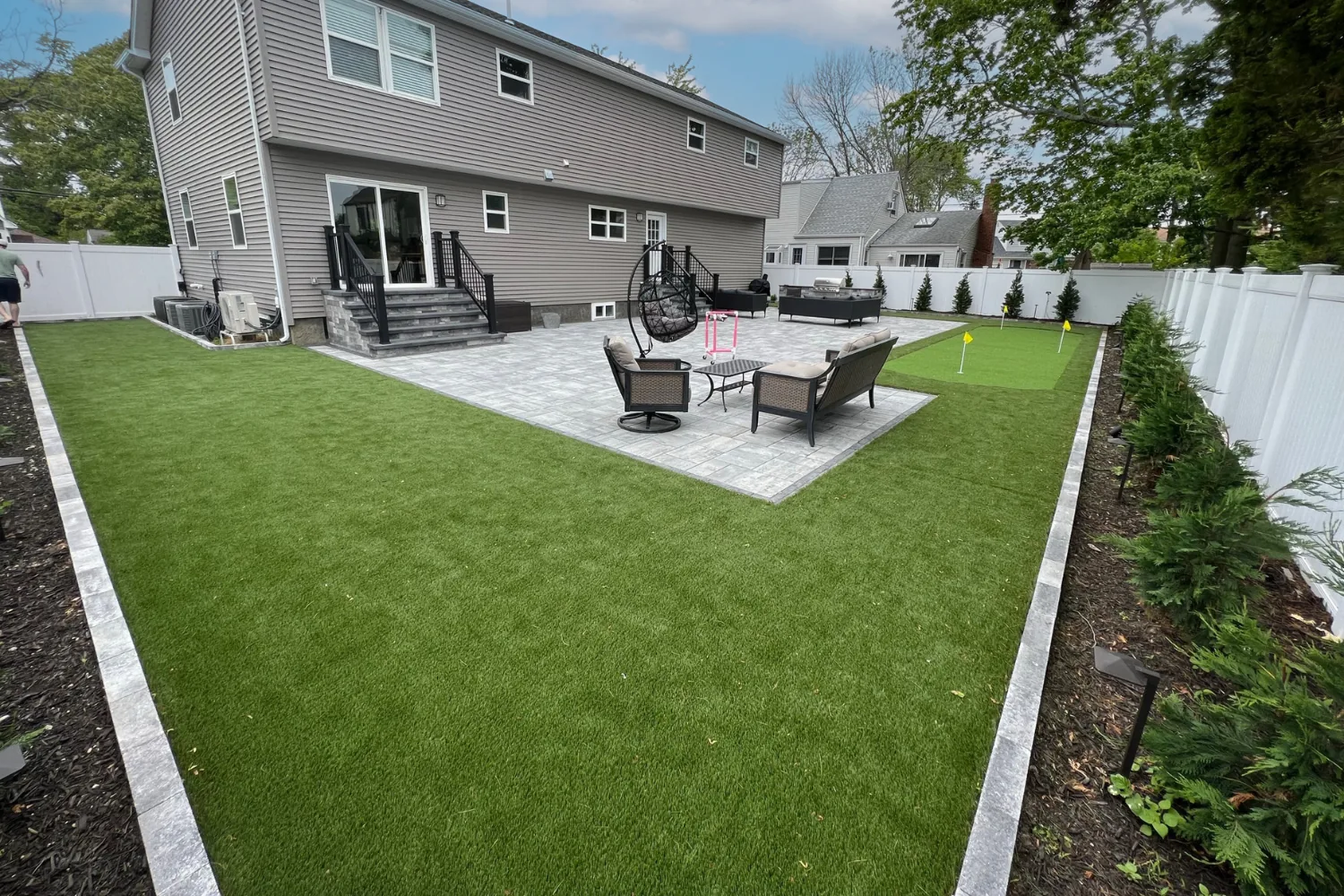
Not every turf project in San Angelo is a backyard lawn. More and more Concho Valley homeowners are putting artificial grass where grass could never grow at all — on top of a concrete patio, across a wooden deck, over a small apartment balcony, or on a flat rooftop space downtown. It is a smart move in West Texas, where a bare slab bakes in the sun and a planter box is a losing battle against the heat. But turf on a hard or elevated surface follows different rules than turf on soil, and getting those rules wrong is how people end up with a soggy, hot, or peeling mess. Here is how to do it right here.
A concrete patio in full Tom Green County sun becomes a griddle by noon and stays warm into the evening. Turf over that slab turns an unusable hot pad into a soft, green, barefoot-friendly space — and it hides cracked, stained, or dated concrete without the cost of tearing it out. On balconies and rooftops, where there is no soil option at all, turf is often the only way to get a living-feeling floor. For renters and condo owners around downtown, it is also removable, which matters when you do not own the slab underneath.
On soil, water drains down through the base. On concrete, wood, or a rooftop membrane, it has nowhere to go but sideways — so drainage has to be engineered, not assumed. For a patio, we rely on the slab existing slope, add a drainage shock pad with channels, and in some cases drill weep holes so a hard Concho Valley rain sheets off instead of sitting under the turf. On a deck, gaps between boards usually handle it, but the turf backing must be fully permeable so water passes straight through. On a rooftop, you work with the existing drains and never block them. Trap water under turf in our climate and you invite mildew and odor fast; plan the water path first and everything else follows.
Any surface gets hot in West Texas sun, and turf on concrete can run warmer than turf on soil because the slab stores heat too. The fix is in the product and the pad. Lighter blade colors reflect more sun, a quality shock pad slows heat transfer from the slab, and a quick hose-down drops the temperature in minutes for use. For a west-facing balcony or an all-day-sun rooftop, we steer customers to cooler-running turf lines and realistic expectations — shade or a rinse before barefoot use. For the full picture on turf and our heat, see our guide on whether turf gets too hot in San Angelo.
Grass over dirt has give; turf over concrete does not, unless you add it. A foam shock pad between the slab and the turf is what makes a patio or rooftop feel like a lawn instead of carpet on cement — it adds cushion, improves drainage, and on an elevated play space it provides fall protection for kids. On decks, the pad also protects the turf backing from the ridges of the boards. It is a small line item that completely changes how the finished space feels, and we rarely do a hard-surface install without one.
How turf is anchored depends on what is under it and whether you own it. On a patio you cannot nail into, we glue the perimeter and seams with outdoor adhesive so nothing lifts in the wind — and our West Texas wind will test it. On a deck, turf can be fastened into the boards at the edges. On a rooftop or a rental balcony where you cannot penetrate the surface, we use adhesive and weighted or taped edges so the whole thing stays put but can come up later without damage. The goal is always turf that will not peel at a corner during a gusty Concho Valley afternoon, installed in a way that respects the surface underneath.
Hard-surface turf is usually a smaller square footage than a lawn, so total cost is often modest — but the per-foot rate can run a bit higher because of the shock pad, adhesive, and drainage detailing. The spaces where it pays off most around here are patios off a west-facing living room, pool-adjacent decks that need a cool and clean surface, rooftop lounges downtown, pet balconies in apartments, and putting or play areas on an existing slab. If your project is light-commercial — a rooftop deck for a business, a courtyard, a patio for a restaurant — our commercial turf guide covers those uses and pricing for the Concho Valley.
The three we see most: skipping the pad and ending up with a hot, hard, carpet-like floor; ignoring drainage so water pools and the space starts to smell; and blocking a rooftop drain, which can turn a nice project into a leak problem for the whole building. Each is avoidable with a few minutes of planning. Because the stakes on a rooftop or balcony are higher than on a backyard lawn — waterproofing membranes and shared drains are not things to guess at — hard-surface turf is one project where a professional eye is worth it even on a small footprint.
Have a patio, deck, balcony, or rooftop you want to turn green and usable? We install turf on hard and elevated surfaces across San Angelo and the surrounding Concho Valley, and we will read your drainage and sun before we quote. Call (615) 241-0232 for a free on-site look.
Hard-surface turf is arguably lower-maintenance than a turf lawn, because there is no soil washing up through it. The routine in San Angelo is simple: rinse it down every week or two to clear the fine dust our wind carries, blow off mesquite leaves and pollen, and give the high-traffic lanes an occasional brush to keep the blades upright. On a pet balcony, a more thorough rinse keeps odor away since there is no deep base to hold moisture — which is exactly why drainage detailing on day one matters so much. Twice a year, check that the glued edges and seams are still tight after a season of wind and heat expansion, and you are done.
One question we get a lot: will turf rot my deck? On a well-drained deck with a permeable turf backing and a pad that lets air move, moisture passes through and dries rather than sitting against the boards. The risk comes from solid-backed turf or a trapped layer that keeps the wood damp — in our humidity swings that is how boards start to go. We install so the deck can still breathe and drain, and on an older or questionable deck we will tell you honestly if it needs attention first. The same logic applies to a rooftop membrane: turf should protect and shade it, never trap water against it. Get the water and air path right and turf actually extends the life of the surface underneath by shielding it from UV.
Drainage, padding and prep for turf on a hard San Angelo surface.
Read article →How West Texas sun affects synthetic grass and how to keep it cooler.
Read article →Rooftop decks, patios and business spaces priced for the Concho Valley.
Read article →Yes, and it is one of the most popular small projects we do here. The keys are a shock pad for comfort and drainage, a slight existing slope or drilled drainage so our downpours run off, and a turf glued or anchored at the edges. Done right, a hot, cracked concrete slab becomes a soft green space.
West-facing surfaces take the worst of the Concho Valley afternoon sun, so yes, bare turf there can get warm. A lighter-colored turf, a shock pad that reduces heat transfer, and a quick rinse or some afternoon shade make it comfortable. For all-day sun, we will steer you to a cooler-running product.
Serving San Angelo and the greater Concho Valley with water-free, drought-proof lawns.