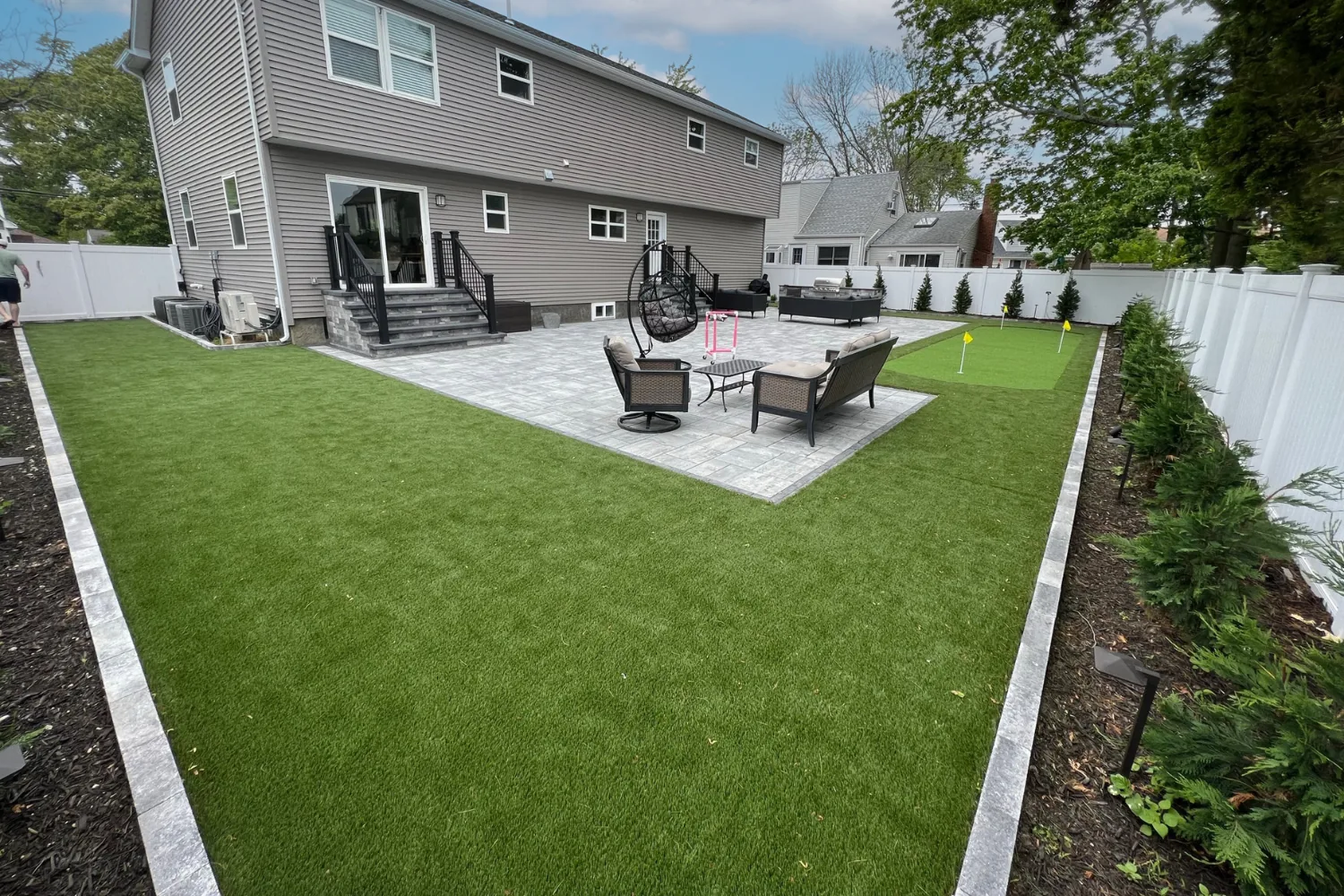
Every San Angelo homeowner who waters a lawn already knows the two numbers that hurt: the water bill in August and the hours lost mowing in 100-degree heat. The question is whether replacing grass with artificial turf actually pencils out here in the Concho Valley, where water is scarce, restrictions are real, and the sun is unforgiving. Let us run the comparison the way you would at your kitchen table, looking at water, upfront cost, maintenance, and the year the switch pays for itself.
Keeping Bermuda or St. Augustine green through a West Texas summer is a fight against the climate. Live grass needs steady irrigation, usually an inch or more per week when temperatures sit in the high 90s, and that demand collides head-on with San Angelo water rates that climb into higher tiers the more you use. Add fertilizer, weed control, aeration, occasional resodding of the patches that die out, gas or electricity for the mower, and either your Saturday mornings or a monthly lawn service, and the true annual cost of a live lawn is far higher than most people tally. Much of that money literally evaporates in our dry air before the roots ever use it.
The hidden costs pile up too. Our alkaline caliche soil is hard on root systems, so lawns here often need soil amendments and extra feeding just to look average. Grub treatments, brown-patch fungus after a humid spell, and the sprinkler repairs that come with any in-ground system all add line items most homeowners forget until the bill lands.
San Angelo depends on a handful of reservoirs that swing with the rain, and when levels drop the city tightens outdoor watering to assigned days or bans it outright. During those stages you are stuck: either pay premium rates for the water you are still allowed to use, or accept a brown, patchy yard until the drought breaks. A turf lawn sidesteps the entire problem. It looks identical in a wet year and a drought year, needs no watering days, and never triggers a restriction violation. If you want the current rules spelled out, we cover them in our San Angelo watering restrictions guide.
This is where the math turns dramatic. An artificial lawn uses zero irrigation to stay green. The only water it ever sees is an occasional rinse for dust or pets, a tiny fraction of what live grass drinks. For a mid-sized San Angelo yard, eliminating summer irrigation can cut hundreds of gallons a day during peak season, which shows up as a noticeably smaller water bill every month from May through September, year after year. Over a full summer that is tens of thousands of gallons kept in the reservoir. The EPA notes that outdoor watering, much of it for lawns, accounts for a huge share of residential water use, and their WaterSense landscaping resources back up just how much a low-water yard conserves.
There is no getting around it: turf costs more on day one than laying sod. It is a professionally installed system with a graded base, weed barrier, premium turf, and infill, so the initial investment is real. But a live lawn is not free either, it just bills you slowly, every single month, forever. When you add up water, mowing, fertilizer, weed treatment, and repairs over the years, a quality turf lawn in San Angelo typically pays for itself somewhere in the range of five to eight years and then keeps saving for the rest of its 15-to-20-year life. Everything after payback is money that stays in your pocket instead of running down the storm drain.
Money is only half the story. A live lawn in the Concho Valley demands mowing every week in the growing season, edging, watering cycles you have to schedule around city rules, and the constant worry about brown spots before company arrives. Turf gives all of that time back. No mower, no fumes, no fertilizer runoff, no muddy paw prints tracked inside after a rare rain. For busy families in Christoval, Eola, and out toward Water Valley, reclaiming those weekends is worth as much as the dollars saved.
A perpetually green, crisply edged lawn also does something a struggling live yard cannot: it looks its best in the exact months buyers are shopping. In a market where half the block goes brown by July, a flawless turf front yard stands out and signals a low-maintenance, water-smart home. Many San Angelo sellers find that a green lawn in a drought summer is a genuine selling point rather than just a personal luxury.
We will always shoot straight: turf is not right for every square foot. If you have a large open acreage lot, a working pasture, or a spot where you genuinely want the feel and smell of cut grass, live turf may still be your pick, and you can pair a small turf area near the house with native, low-water landscaping elsewhere. But for the front yard, the dog run, the play area, and any patch you are tired of fighting to keep green, artificial turf wins the San Angelo math on water, cost, and time by a wide margin.
In a climate defined by drought and heat, the comparison is not really close for most residential lawns. Natural grass keeps charging you for water the city may not even let you use, while turf locks in a green yard with almost no ongoing cost. Bring us your yard dimensions and a recent water bill and we will put honest numbers on your specific payback so you can decide with facts, not a sales pitch.
A typical St. Augustine or Bermuda lawn here needs roughly one to one and a half inches of water per week in peak summer to stay green, which for an average San Angelo yard can mean thousands of gallons every month. During drought stages that water is both restricted and expensive, so many homeowners either overpay or watch the lawn go brown anyway.
Yes. When the city moves to reduced watering days, natural grass browns and thins while a turf lawn stays exactly as green as the day it went in. Turf is completely unaffected by drought stages, watering-day rules, or the summer heat that stresses live grass, which is why so many Wall, Miles, and Grape Creek homeowners switch after a bad drought year.
Serving San Angelo and the greater Concho Valley with water-free, drought-proof lawns.