Home > Blog > Design
Design • August 24, 2026
Xeriscaping with Turf in San Angelo's Dry Climate
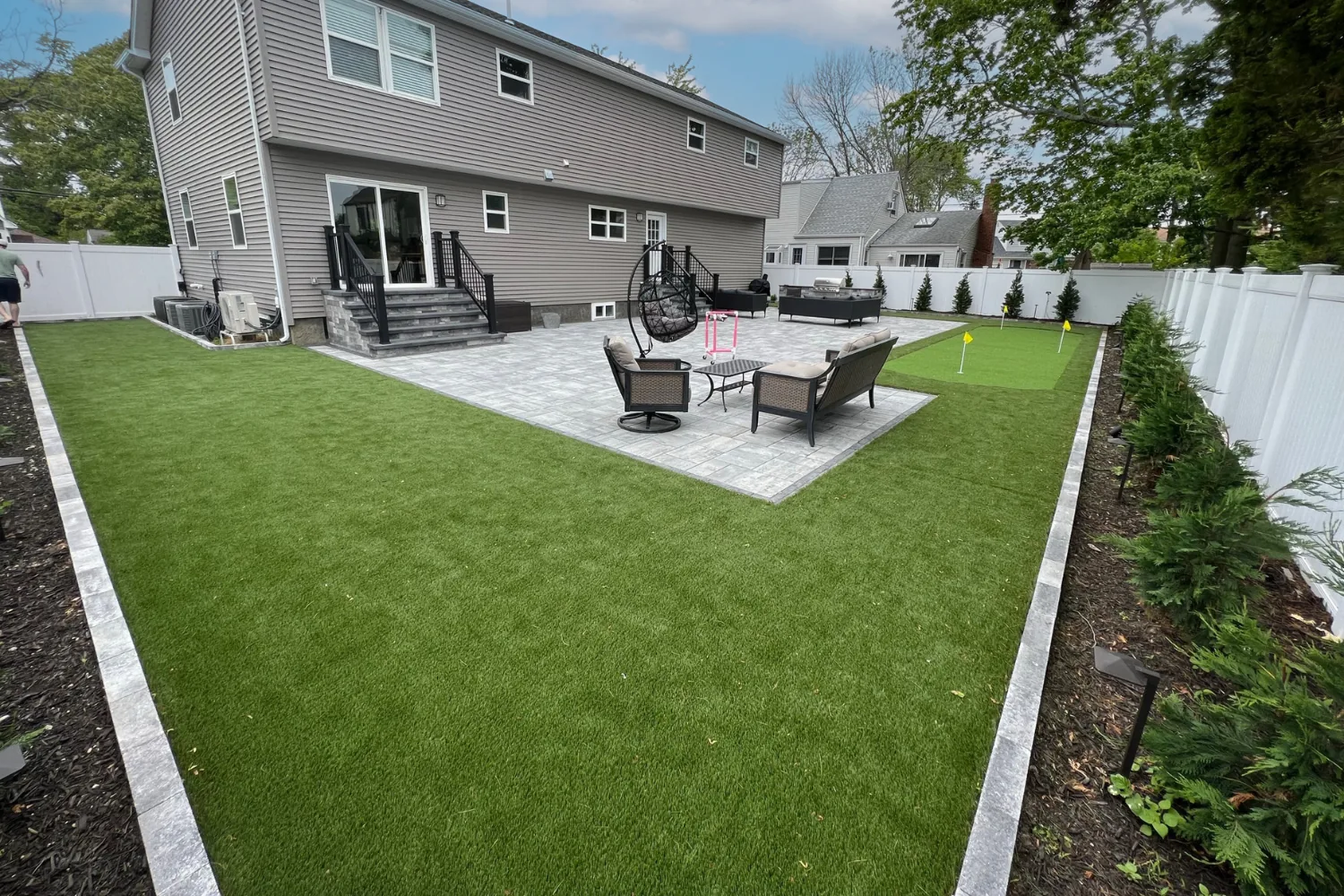
In a region as dry as the Concho Valley, xeriscaping stopped being a trend a long time ago and became plain common sense. West Texas homeowners are tired of pouring water and money into lawns that brown out every summer under watering restrictions. Artificial turf and xeriscaping are natural partners, and when you combine them thoughtfully you get a yard that looks alive year-round and asks almost nothing of your water bill.
Here is how to think about turf inside a real San Angelo xeriscape.
Xeriscaping is often misunderstood as just rocks and cactus. It really means designing a landscape around low water use: grouping plants by their water needs, improving the soil, mulching to hold moisture, and reducing thirsty turfgrass. In San Angelo, where summer highs sit in the upper nineties and hundreds for weeks and rain is unreliable, the goal is a yard that stays attractive without constant irrigation. That is exactly the problem artificial turf was built to solve.
The mistake people make is treating xeriscaping and turf as either-or. The smartest local yards use both. Turf becomes the green, usable zone, the part you actually walk on, let the dog out on, or set a table on, while native beds, rock, and hardscape handle the rest. A common San Angelo layout is a clean turf panel in the center or backyard, framed by decomposed-granite paths and mulched beds of drought-tough plants. You keep the softness and color of a lawn exactly where you use it, and you cut the watered footprint dramatically everywhere else.
The plants that thrive here are the ones that shrug off heat and caliche. Around a turf panel we love to see Texas sage with its silver leaves and purple blooms, red yucca sending up coral spikes, blackfoot daisy, agave and other architectural succulents, lantana for summer-long color, and salvia to bring in hummingbirds. Group these in beds separated from the turf by a clean steel or masonry edge so roots and mulch stay put. The contrast of soft green turf against sculptural desert plants is what makes a Concho Valley xeriscape look designed rather than default.
Rock is a xeriscape workhorse in West Texas, but use it with intention. Decomposed granite makes warm, walkable paths that tie beds together. River rock and cobble handle drainage swales and dry creek beds that carry off our occasional hard downpours. Just avoid the trap of paving an entire yard in dark rock; large rock fields radiate serious heat in a San Angelo summer, which is another reason a turf panel is so welcome underfoot. Underneath it all sits our caliche, which drains slowly and compacts hard, so both the turf base and the planting beds need proper preparation. That is not a shortcut step; it is the difference between a xeriscape that lasts and one that fails.
The payoff is water. The city moves through drought stages that limit how often and when you can run irrigation, and those rules tighten in the worst summers exactly when a traditional lawn needs the most water. A xeriscape built around turf and natives sidesteps the whole problem: the turf needs zero irrigation, and established native beds need only occasional deep watering. The Texas Water Development Board promotes this kind of low-water landscaping across the state, and nowhere does it pay off faster than in a place as dry as the Concho Valley.
A few pitfalls trip up first-time xeriscapers here:
Done right, a turf-and-native xeriscape gives you the best of West Texas landscaping: a green, usable yard, colorful low-water plantings, and a water bill that finally makes sense in the Concho Valley. Whenever you are ready to plan where turf fits in your design, we are happy to walk the yard with you.
If you are staring at a tired Bermuda lawn and do not know where to begin, here is a layout that works again and again in the Concho Valley. Put a clean turf panel where you actually live outdoors, off the back patio or in the play zone, sized to what you use. Wrap it with a decomposed-granite path so you can walk the yard without stepping on beds. Then fill the corners and the hot, hard-to-water strips along fences and the west side of the house with mulched native beds: Texas sage and red yucca for structure, lantana and salvia for color. Add a dry creek bed of cobble anywhere water runs during a downpour. That single template gives you usable green, year-round color, and almost no irrigation.
Low-water does not mean no-care, but the upkeep is light and nothing like chasing a green lawn through a West Texas July. The turf panel needs an occasional rinse to keep dust and pollen down and a quick brush of high-traffic lanes. The native beds want a seasonal cleanup, a refresh of mulch once a year to hold what little moisture we get, and a deep soak only during the harshest stretches until plants are established. Compare that to weekly mowing, fertilizing, and daily summer watering, and it is easy to see why so many San Angelo homeowners never look back once they make the switch. A well-planned turf-and-native xeriscape is the rare yard that looks its best in August, when everything else in the Concho Valley has gone crispy.
There is one more reason turf-and-native xeriscaping has taken hold across San Angelo: it sells. Buyers touring homes in the Concho Valley have seen enough brown, struggling lawns to appreciate a yard that is green, tidy, and obviously cheap to maintain. A thoughtful xeriscape with a clean turf panel signals that the outdoor space is finished and worry-free, which is a genuine advantage when your neighbors are all fighting the same heat and the same watering restrictions. It also photographs beautifully year-round, so listing photos taken in the dead of a West Texas August look just as sharp as ones taken in spring. Whether you plan to stay for decades or sell in a few years, a low-water landscape built around turf is one of the few upgrades that pays you back in both saved water and stronger curb appeal.
You do not have to convert the whole property at once. Plenty of San Angelo homeowners begin with a single turf panel and one or two native beds, live with it through a Concho Valley summer, and expand the following year once they see how little water and effort it takes. Starting small also spreads the cost and lets you fine-tune the layout before committing the entire yard. A xeriscape can grow with you, one low-water zone at a time.
Yes. Xeriscaping is about designing a landscape that needs little to no supplemental water, and turf fits that goal perfectly because it needs none at all. Used as the green, usable zone alongside native plants and rock, it is one of the most practical elements of a West Texas xeriscape.
Tough Concho Valley performers work best: Texas sage, blackfoot daisy, red yucca, agave, lantana, and salvia all handle our heat and caliche with almost no water once established. Group them in mulched or graveled beds so the turf stays the clean, open centerpiece.
Serving San Angelo and the greater Concho Valley with water-free, drought-proof lawns.