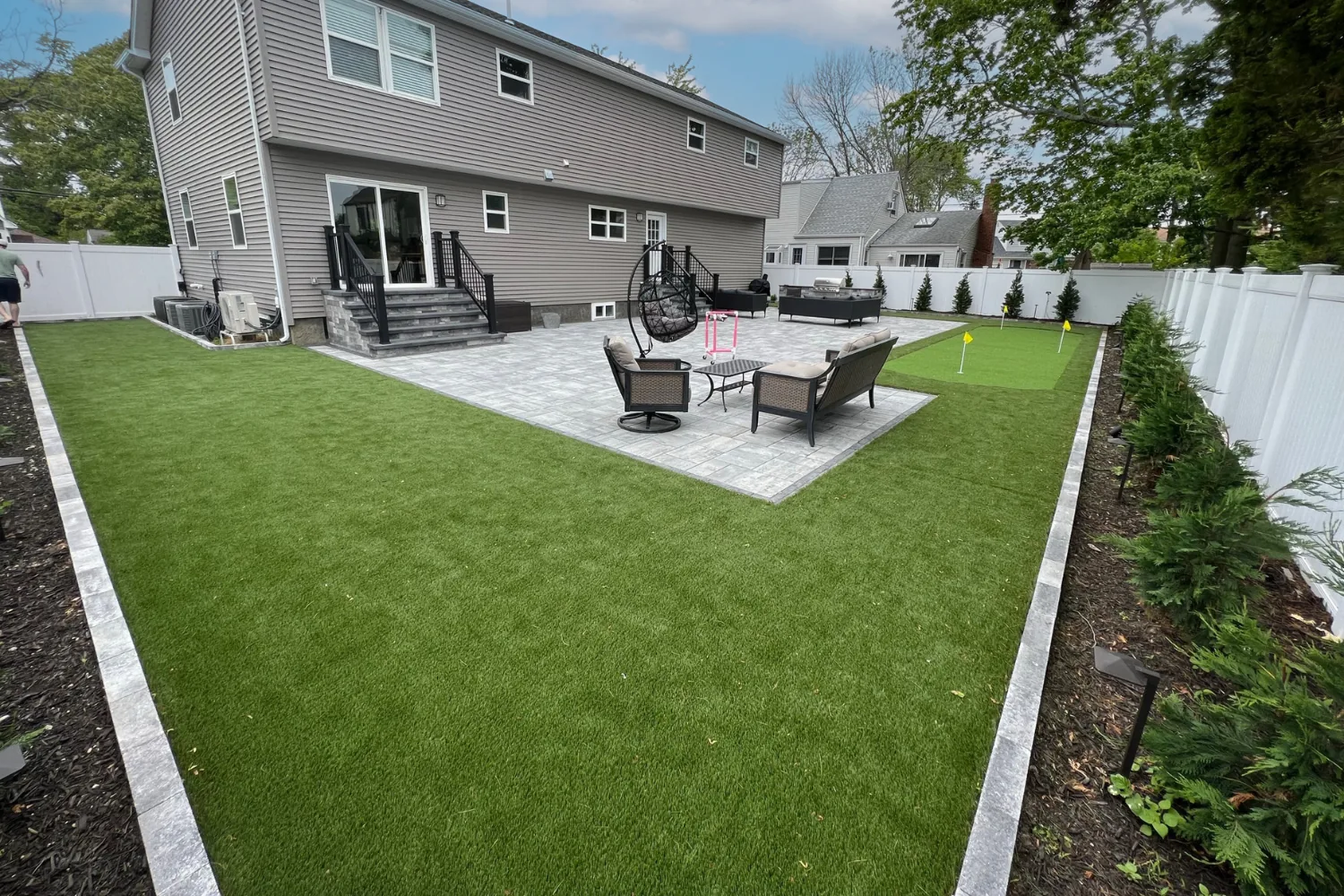
A synthetic lawn should look flawless for a decade or more. When one fails early in San Angelo, it is almost never the turf product to blame; it is the installation. Over the years we have been called to fix the same handful of errors again and again across Tom Green County. Here are the seven that cause the most grief, so you can spot them in a quote or a finished job before they cost you.
1. Skimping on the base rock
The base is the whole ballgame. A thin or uncompacted layer of aggregate settles unevenly, and the turf telegraphs every dip. In the Concho Valley we want several inches of properly compacted crushed rock and road base, plate-compacted in lifts, not dumped and raked. If a bid seems cheap, this is usually where the corner got cut.
2. Ignoring caliche drainage
San Angelo, Grape Creek, and Wall sit on caliche hardpan that will not let water soak in. Install turf over it without a drainage plan and every heavy rain leaves water trapped against the backing. Proper jobs grade the base to shed water and, on stubborn lots, add drainage rock or channels so storm water actually escapes.
3. Under-compacting the sub-grade
Compaction is boring and it is essential. Skipping passes with the plate compactor, or compacting bone-dry material that will not knit together, leaves a base that keeps settling for months. The result is a lawn that looked perfect on day one and rippled by Thanksgiving. Good crews compact in stages and moisten the material so it locks.
4. Poor seams that show and split
Seams are where amateur work reveals itself. Blades must run the same direction on both panels, edges must be cut clean, and the joint glued or stitched and secured so it disappears. Rushed seams show a visible line, and in West Texas heat a poorly bonded seam lifts and separates. A quality seam should be invisible from standing height.
5. Too little infill, or the wrong kind
Infill is the sand that weighs the turf down, keeps blades standing, and protects the backing from UV. Too little and the lawn matts flat and wrinkles; the wrong material and it holds pet odor. For our heat and for homes with dogs, the infill choice matters as much as the turf itself.
6. Choosing turf that is not UV-rated for West Texas
Not all turf is built for our sun. Cheaper products fade, go brittle, and can even soften in extreme heat. San Angelo gets brutal summer UV, so the fiber and backing need to be rated for it. Saving money on an inferior roll is a false economy when it looks tired in three summers.
7. Sloppy edges and no perimeter anchoring
The perimeter is where turf lifts if it is not secured. Edges should be nailed or anchored into a solid border every few inches, tucked against hardscape, and never left floating. Loose edges catch feet, curl in the heat, and give weeds and Bermuda a doorway back in. Clean, anchored borders are the mark of a lawn built to stay put.
Bonus mistake: hiring on price alone
The cheapest bid almost always wins the job and loses the lawn. When an installer underprices the field, the savings come from the parts you cannot see on day one: a thinner base, fewer compaction passes, a cheaper turf roll, or less infill. The lawn looks identical at handover and then diverges over the next two summers. In a market like San Angelo, where our heat and caliche punish shortcuts, the lowest number is a warning sign more often than a bargain.
How to protect yourself before you sign
Ask for an itemized quote that lists base depth and material, compaction method, seam technique, turf specification with its UV and warranty details, and infill type and amount. Ask to see finished lawns the crew installed two or three years ago, not last week. And make sure the perimeter and drainage approach are spelled out for your specific soil. An installer who answers all of that plainly is telling you they build the parts that matter; one who waves the questions away is telling you something too.
The common thread through all seven is patience in the parts you cannot see. The turf you can pick from a sample; the base, the drainage, the seams, and the anchoring are what you are really buying. Ask any San Angelo installer to walk you through how they handle these, and the answer will tell you a great deal about the lawn you will be standing on for the next ten years.
The one question that reveals a good installer
If you ask a San Angelo installer only one thing, make it this: how will you handle drainage on my soil? The answer separates the pros from the price-cutters. A serious installer will talk about testing whether you are on caliche, grading the base to shed water, and adding drainage rock or a channel where the hardpan traps it. Someone who shrugs and says turf just drains on its own has never dug a test hole in Tom Green County. Drainage is where our climate is unforgiving, and it is the detail that most often decides whether a lawn stays fresh or turns into a swamp after a monsoon.
Serving San Angelo and doing it right
We build synthetic lawns across San Angelo, Wall, Grape Creek, Christoval, Miles, and the wider Concho Valley, and we would rather do one lawn correctly than three cheaply. Every quote we write itemizes the base, the compaction, the seams, the turf grade, and the infill, so you can see precisely where your money goes and compare us fairly against any other bid. Avoiding these seven mistakes is not about spending the most; it is about spending on the parts that carry the next decade of use. Get those right, and the lawn takes care of itself through every West Texas summer to come.
What a realistic timeline looks like
Rushing is its own mistake. A typical San Angelo turf project runs one to three days depending on size, access, and how much excavation the base demands. Day one is usually demolition and grading; the base compaction and turf install follow. Beware any crew promising a full backyard done in a few hours, because that speed almost always means the base got shortchanged. Good work here is methodical, and the compaction and drainage steps simply take the time they take. When an installer gives you an honest timeline that includes real base work, treat it as a good sign rather than a delay, because those unhurried hours are exactly what keep the lawn flat and draining for the next decade of Concho Valley summers.